 In Italo Calvino’s Night Driver, a man speeds to his girlfriend’s house to apologize about a phone argument during which he called off their relationship. He needs to get there quickly, because she threatened to call a rival. He faces two problems in getting there on time: 1) they live far apart, so it is a long drive; and 2) he thinks too much. As he drives, the man examines every possibility as to what the other two may be doing, whether one or both could also be driving along the same highway, and what other steps he should take. More…
The Snake and the Mirror
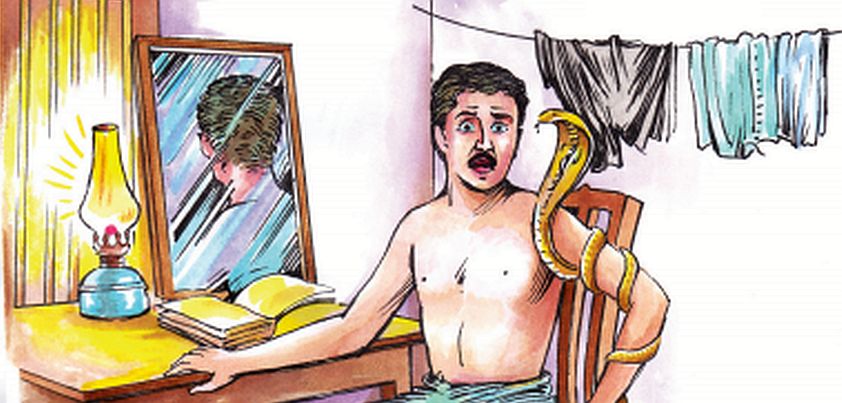 On the surface, this story by Vaikom Muhammad Basheer is a humorous tale about a tense encounter between a young doctor and a cobra that becomes taken with its own beauty. Looking more deeply, it is unclear which “snake” the title refers to. The doctor is a vain, devious man who fusses over his appearance and plans to marry a wealthy, fat woman doctor who won’t cause problems if he makes some silly mistake (i.e. cheats on her). He turns to God when in trouble, but quickly forgets Him when it passes. Themes include vanity, fear, the transience of life. More…
Up in Michigan / My Old Man
 Today we have two short stories from Ernest Hemingway’s first book, Three Stories and Ten Poems, published in Paris in 1923. Although they don’t exhibit the tight, straightforward writing style for which Hemingway later became famous, they are indicative of the writing genius to come. The first, Up in Michigan, issues a grim warning to women about date rape. The subject matter was so contentious that it wasn’t considered publishable in the United States until 1938. The second story, My Old Man, is a coming of age story dealing with a boy’s relationship with his jockey father. More…
The Falling Girl
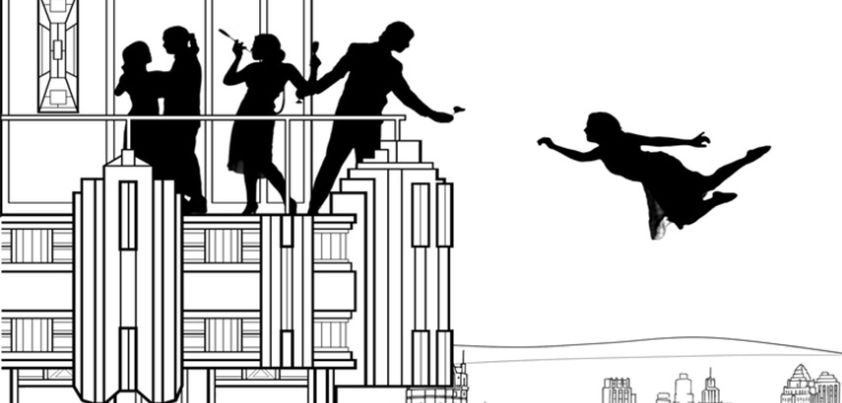 The meaning of this thought-provoking story by Dino Buzzati is reflected in both the building and the girl. The skyscraper is a metaphor for society: the idle rich party at the “top”, as the working class scurry about at the bottom. The story represents an attractive young woman’s journey from the glamor and excitement of the “high life” to the loneliness, frailty and fears of old age. In the sad conclusion, she has no one to mourn her (hear the “thud”) when she hits the ground. Themes include social class, consumerism, envy, lack of fulfilment, ageing, alienation and loneliness. More…
Town and Country Lovers
 Although the South African law banning sexual intercourse between “whites” and “non-whites” was repealed in 1985 (five years after Nadine Gordimer wrote this story), inter-racial and inter-religious relationships are still frowned upon in some cultures. Moreover, as in the story, the consequences for women are often much more severe than for men. Despite the obvious affection between the two couples in the story, questions arise as to whether for the men the sex was a function of convenience rather than love, and the extent to which the women initially felt pressured into participating. Themes: forbidden love, sexual coercion, unequal consequences. More…