 This story from Jane Bowles examines the toxic relationship between three troubled sisters who share a city apartment. One of them is midway through a ten-week holiday in a Camp Cataract cabin as part of a long-term plan to move out and live independently. When another turns up uninvited, hoping to convince her to cut the holiday short, they arrange to meet for lunch the next day. Both have different recollections of what happens the following morning. Madness intervenes, and only one of them survives the day. Themes: self-analysis, identity, independence, mental illness, spinsterhood, female relationships. More…
What You Pawn I Will Redeem
 In Sherman Alexie’s typical witty style, this story recounts what turns out to be a very special day in the life of a homeless, alcoholic Native American man. The central theme, symbolized by his grandmother’s stolen ceremonial regalia, is the importance of Native Americans being able to preserve and connect with their tribal culture. A second theme is how past injustices and support system failures have resulted in Native Americans having the highest homelessness and poverty rates in the country. Other themes: identity, alcoholism, community, kindness, perseverance, connection. A possible moral: never give up if you really want something. More…
The Killers
 In this coming of age story by Ernest Hemingway, two hit men come to a small-town restaurant to shoot a man to oblige a friend. The three men already in the restaurant (its manager, cook and a young customer) are detained but, when the intended victim (a prize-fighter) doesn’t turn up, they are released and the hit men leave. The customer hurries to warn the prize-fighter. However, the poor man appears to have accepted his fate, saying there is nothing anyone can do to save him. Themes include crime, passivity (“looking the other way”), futility, acceptance, courage, manhood, disillusionment. More…
In the Shadow of War
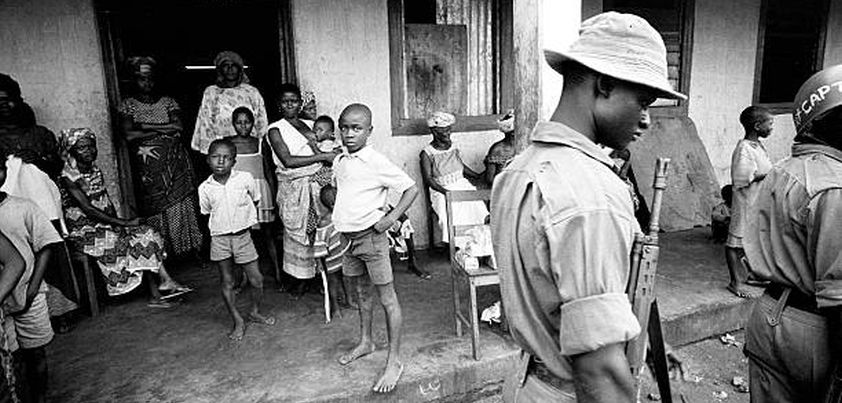 In this story by Ben Okri, a boy becomes curious about a mysterious woman who walks through his village every day wearing a black veil. Set during the Nigerian Civil War, other children think she is a witch; three soldiers looking for her think she is a spy. The soldiers follow the woman into a forest, as does the boy. Sufficient ambiguity exists for readers to question whether the horrific events described in the forest really take place, or if the woman is indeed a spy or simply a kindly benefactor. Themes include loyalty and morality in war, brutality, humanity. More…
The Devil and Daniel Webster
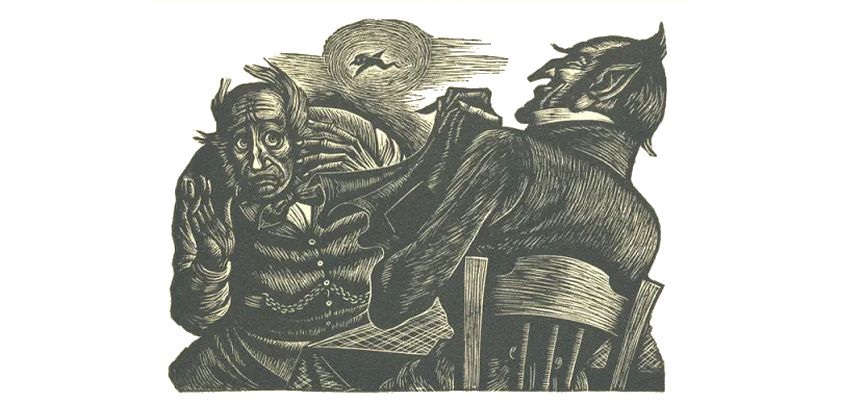 In this American tall tale by Stephen Benét a hapless farmer sells his soul to the devil in exchange for seven years of good luck. When the time comes to “pay up”, he asks Daniel Webster, famed lawyer, orator and all around good guy, to help him get out of the deal. After attempts at compromise fail, Webster insists on a trial according to American law. Although the devil whips up a stacked judge and jury comprised of dead scoundrels, Daniel’s speech about American values wins the day.. Themes include patriotism, temptation, good vs. evil, “neighborliness” (helping others), and righteousness. More…