 This story by Alice Adams deals with themes of fear, preparedness, pride, gender expectations and poverty. As a wealthy-looking American couple walk through the darkened streets of Barcelona, a thief grabs the woman’s purse and flees. The husband gives chase and recovers it, but appears strangely disappointed when his wife tells him that she always carries her money in her pocket and the bag contains nothing of value. The wife reflects on how men are always “chasing something” to prove their self-worth, and feels sorry for the plight of the poor who must steal to do so. More…
Thank You, M’am
 This 1950s story from Langston Hughes has messages for both young and old. A teenage thief (Roger) learns that in addition to it being wrong to try to get things “the easy way”, sometimes the person you target is a kindly soul who can ill afford it. Mrs Jones knows what it is like to grow up poor. Instead of handing Roger over to the police, she tries to help him. Sadly, one suspects that her actions (taking the lad home for a meal and friendly chat) would not be safe in today’s world. Themes: crime, forgiveness, understanding, trust, kindness. More…
The Green Leaves
 This story from Grace Ogot reads like a folktale. With an overall theme of culture conflict between the modern world and the traditions and beliefs of a Kenyan tribe, the plot can be divided into three sections. The first (ending with Nyagar’s death) has themes of crime, tribal justice, violence, superstition and greed. The second, involving the British authorities, emphasizes colonial arrogance and cultural insensitivity. The third, in which Nyagar’s wife laments his death, introduces a feminist theme. Her chant reflects not only her own loss, but also the powerlessness and complete dependence of all village women on their husbands. More…
Naga
 In this story by R. K. Narayan, a widowed Indian snake charmer trains a monkey for his young son so the two can work together entertaining people in the streets. All goes well until the father runs away with a strumpet in a blue sari, taking the monkey with him. Left alone with the snake, which has grown too old to perform, the boy misses the monkey more than his father. He reluctantly keeps the snake after realizing it can’t survive in the wild, and looks for another kind of work. Themes include poverty, selfishness, abandonment, independence, loyalty, compassion. More…
The Last Leaf
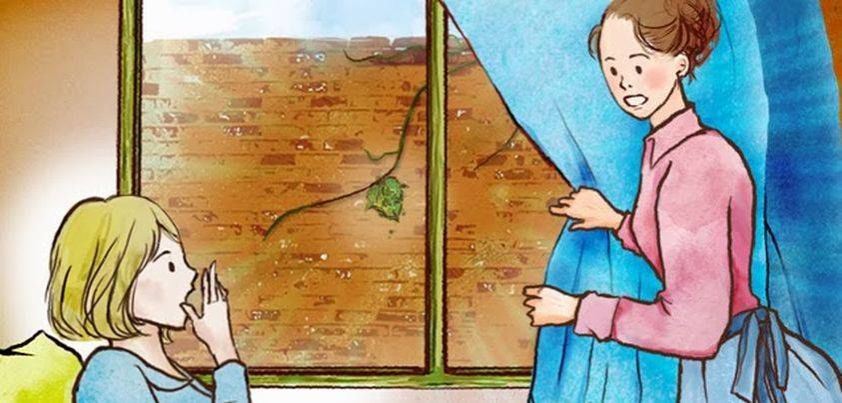 This story by O. Henry is one that most who read it never forget. Two young women trying to make a living as artists share an apartment in New York City. One of them becomes very sick, and believes that she will die when the last leaf falls from an ivy plant on the wall opposite her window. An unlikely figure (an old, alcoholic, failed artist who rarely has a nice word for anyone) helps to save her. However, his act of kindness comes at a very high cost. Themes include friendship, defeatism vs. hope, compassion, sacrifice, art. More…