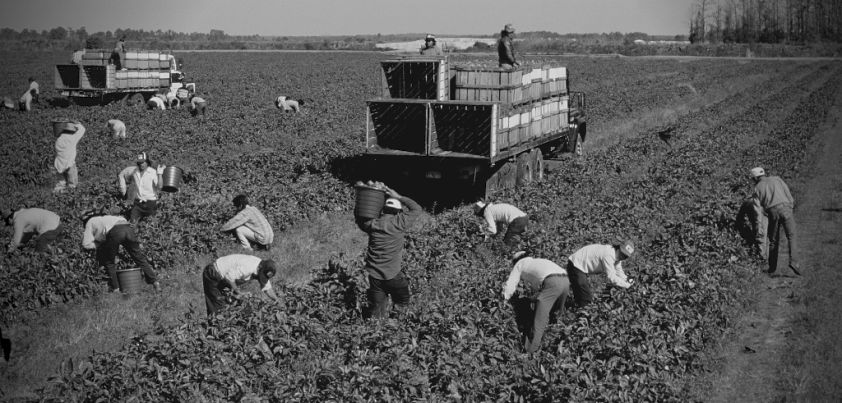
 This is one of a series of stories by Tomás Rivera about Mexican-American seasonal farm workers. The harvest is over and, as a group is looking forward to returning to their home base in Texas, they begin to wonder about the unusual behaviour of one of their older members. The single man with no family walks alone into the fields each afternoon, and refuses to allow anyone to follow. Rumors circulate among younger workers that he either is hiding his wages somewhere, or has found buried treasure. Themes include materialism, ritual, spiritual connection to nature and the land. More…
The Magic Sweet Shop
 In this story by Enid Blyton, two children out playing in the woods follow a path they had not seen before. It leads to a small village in which there is a strange candy shop. They each buy five different colored sweets with unusual names: a Giant-sweet, Dwarf-sweet, Invisible-sweet, Spiky-sweet and Home-again-sweet. They then have some exciting adventures in which the candy they bought saves the day. As might be expected, the Home-again-sweet leads them home. When they take their mother to the path that led them to the village, they find that it is no longer there. More…
A Family Supper
 A common feature of Kazuo Ishiguro stories is their ambiguous endings. A young Japanese man returns home after living in America following a falling out with his parents. His mother has died from eating poisonous fugu fish, and his father feels disgraced over the collapse of his business. As a matter of honour, his business partner killed his family and committed suicide following the collapse. At the end of the day, the family sits down to a delicious fish supper prepared by the father. Themes include change (heritage and tradition vs. modernity), generational conflict, family disconnection, grief, guilt, “honour”, murder-suicide. More…
What We Talk About When We Talk About Love
 The power of this minimalist story from Raymond Carver about the difficulty of defining “real” love lies in its realism. The two couples involved in the alcohol-fueled conversation are not experts; each member has experienced a failed marriage. None of them can describe love, but they do manage to give examples of what it is and isn’t, and what can go wrong when it ends. The mood darkens along with the emptying bottle, and by story’s end all four are too despondent to move. Themes: the nature of love, the limits of language, marriage and divorce, alcohol abuse. More…
Mr Know-All
 This story by W. Somerset Maugham takes place at sea. A narrator we learn almost nothing about is forced to share a cabin with a man he takes an instant disliking to because of little more than his name. The other man plays an organizational role in many aspects of ship life to the point of being everywhere and always. The narrator finds him hearty, jovial, loquacious and argumentative. He calls him the best hated man in the ship. It is not until the man ‘loses’ a bet about pearls that the narrator develops a grudging respect for him. More…