 In 2013, North Korean writer Bandi reputedly smuggled seven stories, including this one, out of the country. Although unverified, the stories provide a valuable insight into the fear and repressed lives of North Korean citizens. In this one, ‘unpatriotic behavior’ by a two-year-old child results in banishment of a senior bureaucrat and his family to the countryside. Earlier, the child had suffered a fit in its mother’s arms. In most countries, she would call for a doctor. Here, we are told that had a doctor happened to be at hand, the incident might well have ended in disaster. More…
A Fish Story
 Although this story was described as an “Australian” folktale when published in 1910, Australia is too young a nation to have folktales of its own. This is an adaption of an Australian aboriginal myth. Like those of many ancient cultures, it tries to explain the meaning of every-day things: in this case, how fish got into rivers and why rivers always feel warmer if you swim in them on a cold day. According to the story, fish used to live and hunt on the land and only came to live underwater because of an accident lighting a fire. More…
The Champion of Quiet
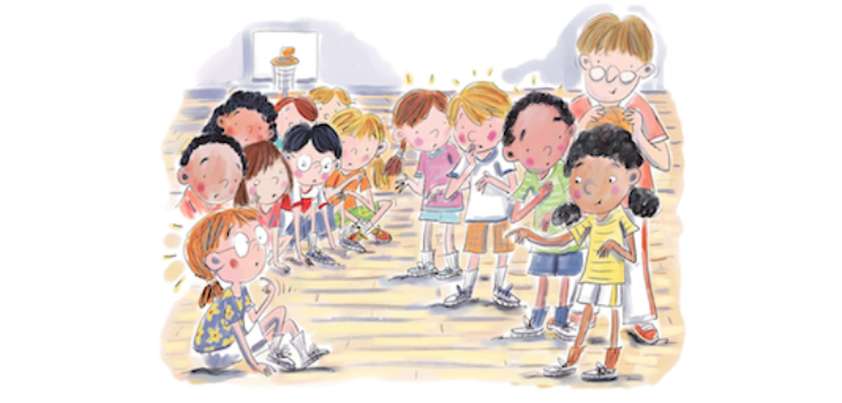 This story by Tracy Stewart for Highlights Magazine includes a number of important life lessons for young learners. The first is individual differences. Nobody is good at everything, but almost everybody is good at something. Importantly, you don’t have to be good at something to enjoy it. By joining in and trying your best, you can have just as much fun as those who are great at it. Maggie proved that she wasn’t just the Champion of Quiet. She became the Champion of Understanding and Kindness, and learned that this is the easiest way of all to make new friends. More…
The Circuit
 This is a chapter from the The Circuit: Stories from the Life of a Migrant Child, a collection of autobiographical short stories by Francisco Jiménez. The title refers to the way many migrant laborers move from place to place over a year in search of seasonal farm work. For the children of this close-knit family, this means poor living conditions, never being in one place long enough to have permanent friends, working in the fields when old enough, and limited opportunities to attend school. Themes include family, poverty, perseverance, impermanence, loneliness, language and communication, child labor, lack of educational opportunities. More…
Odour of Chrysanthemums
 D. H. Lawrence’s Odour of Chrysanthemums begins with an introduction to a woman living in a coal-mining village who feels trapped in an unhappy world of her husband’s making. Although her father is working-class (an engine-driver), her speech and behavior suggest that she aspires to a better life. The accidental death of her husband (a miner) triggers an epiphany in which she realizes that they never really knew each other, and that their problems were equally of her own making. The main theme is superficial (physical) attraction vs. love. Other themes: industrialization, social class, sex roles, isolation, mother-child connections, death. More…