 In this atypical Edgar Allan Poe story there is madness, but not the destructive kind; death, but not the gruesome kind; and a spirit, but not a frightening one. Also unusual is Poe’s extensive use of poetic prose. His description of the idyllic valley may be an allusion to the Garden of Eden, leaving readers to wonder if the couple’s incestuous lovemaking beneath the serpent-like trees was the “apple” that destroyed their paradise. Themes: the beauty of nature, innocence, passion, love, death, moving on. Poe’s message: true love endures; despite the loss of a loved one, life must go on. More…
Kusum
 In this story by Khushwant Singh, a young university student belatedly has a sexual awakening. Overweight and physically unattractive, she has compensated by being a model student and good girl with a capital G. Accepting her lot, she has shunned boys and had no interest in sex. That is until her passions are stirred by an accidental encounter with a cheeky young street hawker who makes an obscene, possibly flirtatious gesture at her. She puts on make-up, looks in her mirror, and an attractive, dark-eyed girl smiles back. Themes include identity, self-image, alienation, self-confidence, physical vs. inner beauty, sexuality. More…
Tong
 This story by Francisco Sionil José follows a courtship between a Filipino accountant and young Chinese woman. The relationship faces opposition from their families as inter-cultural (especially Filipino-Chinese) marriages are frowned upon by both communities. Moreover, one obstacle not easily overcome is a “tong” (debt that must be repaid). The girl is promised to a fat, bald Chinese man old enough to be her father in exchange for favors done for her family. After a passionate final night together, they are separated forever. Themes include forbidden love, cultural division and conflict, socioeconomic inequality, exploitation/human trafficking, family honor and loyalty. More…
The Summer of the Beautiful White Horse
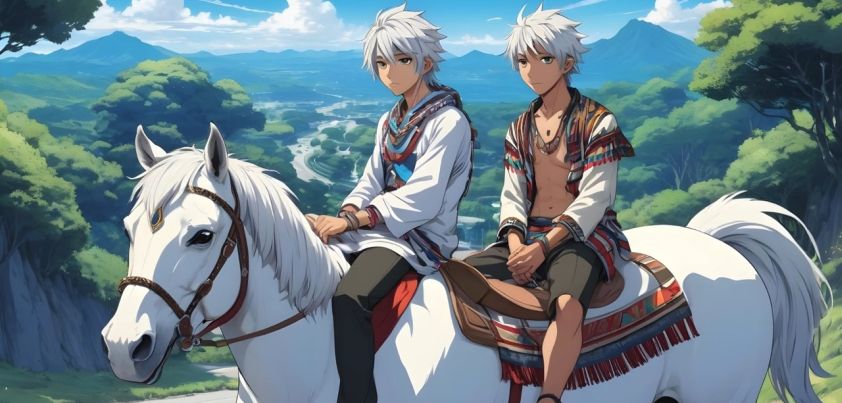 This story by William Saroyan describes a nine-year-old boy’s short encounters with a beautiful white horse ‘borrowed’ without permission by an older cousin. The boy’s family is part of an impoverished Armenian farming community living in the United States after being displaced from their homeland. The tribe to which the family belongs is renowned for the honesty and integrity of its members and, as might be expected, these are central themes of the story. Other themes include the refugee experience, temptation in the face of poverty, family values (reputation) vs. desire, rationalizing inappropriate behaviour, compassion, conscience. More…
The Intoxicated Years
 This story by Mariana Enriquez is set during one of Argentina’s worst economic crises. As their parents struggle for economic survival and fight their own demons, three late-teenaged girls are given almost total freedom. With no respect for adults or their conventional peers, the thoroughly dislikeable trio pursue a hedonistic, drug and alcohol fueled lifestyle. The socially detached girls pledge a bond of “sisterhood”. When a punk rocker causes one of them to distance herself, the others exact violent retribution. Themes include alienation, social isolation, alternative culture, drug dealing and abuse, betrayal, revenge. More…