 In this psychological horror story by A. E. Coppard, an idealistic man who has withdrawn from society due to constant rebuff sits alone in a mouse-infested garret. As he watches the antics of a mouse in front of his fireplace, his mind wanders to the death of his mother and loss of the only woman he ever loved. When he comes back to reality, the mouse is sitting before a trap with its forepaws torn off. Association of this with his mother’s grisly death sends him to the brink of madness. Themes include mother-child relationships, loss, depression, despair, shame, insanity. More…
Fleur
 This story by Louise Edrich incorporates elements of magical realism and Chippewa Indian mythology. It recounts the experiences of Fleur, a Native-American woman who leaves her tribe after several mystical experiences to work in a small-town butchery. Fleur is not only strong, independent and confident, but has seemingly magical powers that, among other things, help her consistently win money from her male co-workers in after-work card games. This damages the men’s egos, leading to her brutal rape and the “accidental” death of her three abusers. Themes: female power, sexuality and mystique; racism; gender and cultural conflicts; violence. More…
Federigo’s Falcon
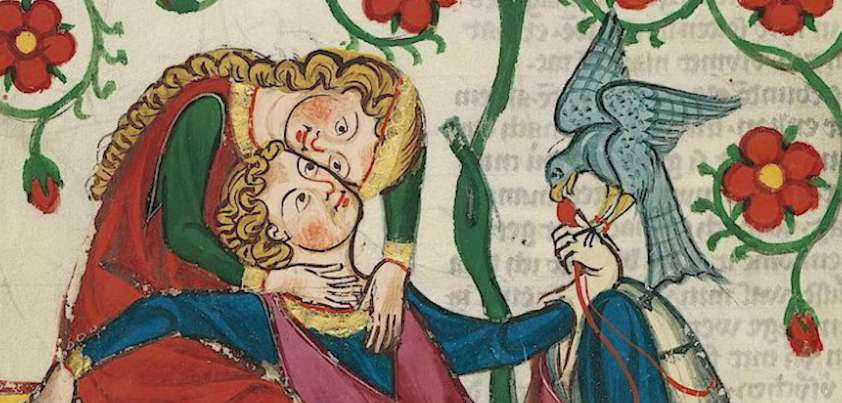 Officials issued public pleas and advised residents on measures that would minimise risk of contagion, such as social distancing and increased personal hygiene. Sound familiar? This comes from the introduction to The Decameron, a 1353 collection of tales told by a fictitious group hiding from the plague (smallpox). Although most of the stories were borrowed from early Eastern and European sources, Italian author Giovanni Boccaccio cleverly re-wrote (and in some cases reinvented) them into a fascinating account of life at the time. In this story, a poor noble mistakenly sacrifices his prized hunting bird to impress the woman he loves. More…
The Bakery Attack / Second Bakery Attack
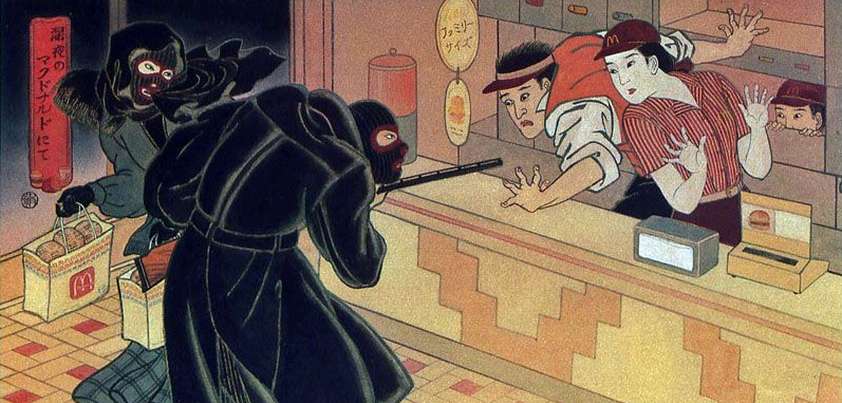 The Second Bakery Attack, one of Haruki Murakami’s most popular stories, is the sequel to an earlier, less well-known work. In the first story, an empty stomach symbolizes a life empty of ambition and intellectual stimulation. In the second, it symbolizes the insecurity inherent in a recently married couple’s (as yet) superficial relationship. The man has a lot to learn about his new wife, as becomes clear when she proves surprisingly adept at planning and carrying out a robbery. For the couple, the successful robbery proves a bonding, curse-lifting experience. Themes include marriage, insecurity, gender roles/’manhood’, the supernatural, change (Westernization). More…
Liberty
 On a superficial level, the speckled dog in Julia Alvarez’s Liberty symbolizes the freedom the protagonist’s family are looking forward to in America, and the freedom the girl hopes to find in her own country when she returns. On another level, it could symbolize the American consul: a seemingly ordinary person who causes trouble. Darker themes include implied American involvement in covert actions against her country’s government, the surveillance and atmosphere of fear that builds throughout, and the fact that the family’s freedom requires a sacrifice… turning their beloved dog loose to fend for itself. More…