 This story by Leslie Marmon Silko retraces the life of a Yupic Eskimo woman up to the point she is jailed for murder. The story deals with the effects of “Gussick” (American) miners and traders on traditional village life, the way the village community supports her family of eccentric outcasts, how her sexual molestation by her grandmother’s partner drives her into the arms of American miners, and her quest for retribution against a Gussick storekeeper who sold poisoned liquor to her parents. Themes include cultural loss, exploitation, alienation, community, revenge, and storytelling. More…
A Ride Out of Phrao
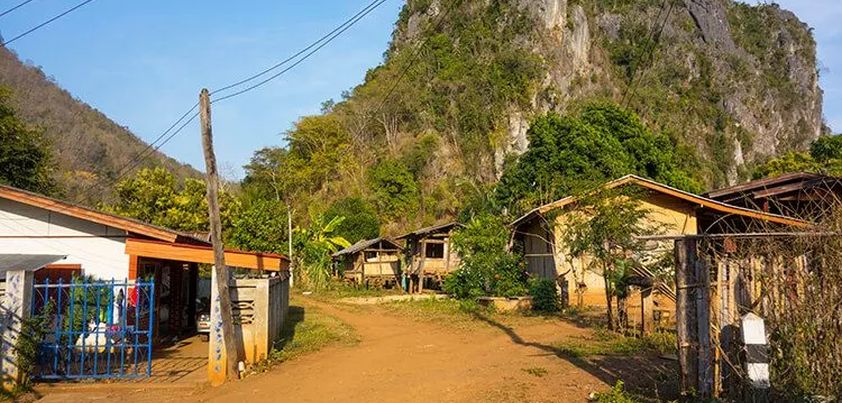 In this story by Dina Nayeri a willful, “middle-aged” Iranian-American woman whose life has fallen apart in the United States joins the Peace Corps and is posted to a small village in Northern Thailand. After exploring some of her experiences settling in, the story moves to a visit by her estranged daughter. The mother is a shameless liar and had even lied about the accommodation they would be sharing… a steamy hut with a squat toilet! Needless to say, the visit doesn’t last long. Themes include community life, culture clash, isolation, social conventions, mother-daughter relationships, identity, truthfulness, resistance, perseverance. More…
Three Thanksgivings
 In this story by Charlotte Gilman, a widow faces pressure from three sides. Her married children want her to come and live with them, and the man who holds a mortgage over her large family home wants to marry her. She doesn’t want to move or remarry, doesn’t have the means to repay the mortgage, and has three Thanksgivings to make a decision or find the money. In helping five hundred other women, she builds a new life and solves the problem. Themes include gender expectations, financial independence, self-sufficiency, entrepreneurship, community.
More…
Fat
 Few authors could write as powerful a story about a non-PC topic (body shaming) as Raymond Carver has done here. Major themes are the way we judge people, loneliness and choice. A waitress’s co-workers dehumanize a customer by making fun of his size. They have no empathy for the person within. The experience greatly affects the waitress. She is expecting change. Is it leaving her insensitive partner? Could she, as some readers suggest, be pregnant and worried about getting fat herself? Or has she been inspired to face something about herself that she has been too afraid to address before? More…
The Outsider
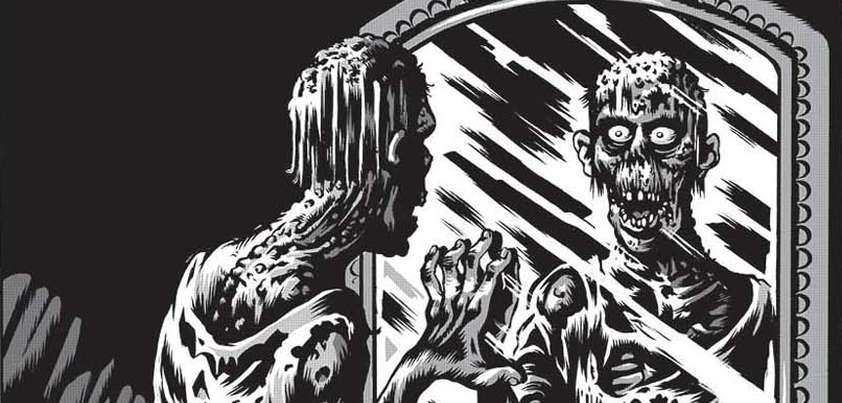 H. P. Lovecraft was a pioneer of cosmic horror, a sub-genre in which gothic settings and “other-worldly” elements replace shock and gore. A feature of his writing is nightmare-like plot twists that defy logic or reason. Here, a man grows up alone in a decaying castle set among frightening woods. When he climbs the crumbling castle tower to look further afield, he finds a stone slab that leads to an earth-like world above the clouds. He is excited to encounter other people, but soon learns a frightening truth. Themes include alternative reality, isolation and loneliness, social rejection, alienation, self-discovery. More…