 Wunderkind (wonder child) is a German expression for child prodigy. The major theme of this story from Carson McCullers is a problem encountered all over the world: the tendency to place so much pressure to succeed on the shoulders of gifted children that they become discouraged and begin to under-perform. Questions are also raised as to whether the protagonist (fifteen-year-old Frances) has the passion to become a great pianist and, if so, whether her teacher (a well-meaning family friend) is the best one to work with her. Other themes: alienation/loneliness, competitive pressure, fear of failure, sexual confusion, escape. More…
Blues Ain’t No Mockin Bird
 Major themes of this story by Toni Cade Bambara are respect for oneself and others, and maintaining one’s dignity when treated disrespectfully. Two white men making a government film on their property anger the matriarch of a poor African-American family. They show disrespect by invading her family’s privacy and filming them without permission, speaking down to her in a condescending way, and ignoring her demand to stop filming. Although clearly enraged, she remains outwardly calm; not so her husband who, sensing her feelings, takes non-violent but decisive action. Other themes include social class, racism, privacy, storytelling. More…
This Is Earle Sandt
 This Robert Olen Butler story is loosely based on the death of American aviator Earle Sandt. A small town banker attends an aerial exhibition with his young son. It is the first time either has seen an aeroplane, and they witness the crash that killed the pioneer pilot. Both are traumatised. The boy recovers quickly, but not so the banker whose ordered world and religious faith have been shaken. He begins to identify with Sandt, asking: Did I sense a God all about me in the sky?, and answering: Forgive me, no. Themes include progress/change, mortality, faith, despair, identity. More…
The Life You Save May Be Your Own
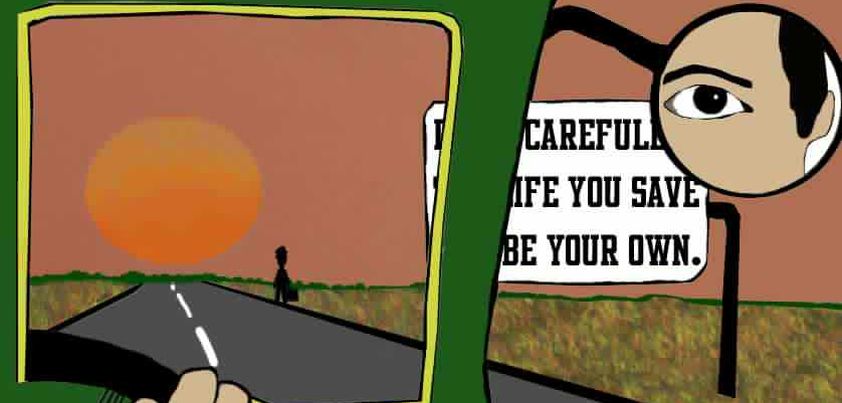 In this Flannery O’Connor story a cynical, manipulative, one-armed drifter is given a chance at redemption (settling down to a “better” life) by an equally manipulative mother desperate to secure a future for her mentally handicapped daughter. Rather than the daughter, the man only has eyes for the family’s “barn-find” automobile. Immediately after their wedding, he leaves the girl to an uncertain future at a roadside diner and drives on alone. Perhaps out of guilt, he unsuccessfully tries to absolve himself from the moral consequences of his actions by doing a good deed. Themes: disability, devotion, desperation, deception, redemption, independence. More…
The Bus Driver Who Wanted To Be God
 In this Etgar Keret story, a bus driver cares more about social justice than kindness. This may explain why he didn’t get the job he really wanted – to be God. The driver’s attitude suddenly changes when he has an epiphany moment witnessing the misery of Eddie, the world’s nicest loser, who is running late for an important date. Eddie believes that he has found true love in ‘Happiness’, the world’s sweetest girl. Unfortunately, Happiness proves to be a little too sweet. She is planning to stand Eddie up rather than hurt his feelings by admitting she already has a boyfriend. More…