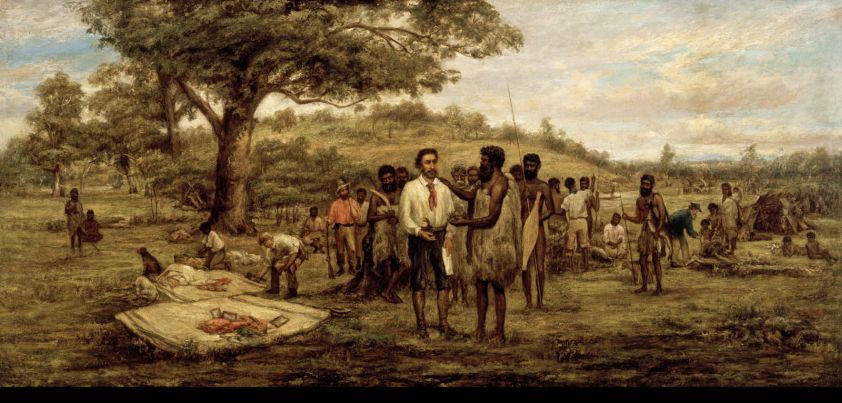
 Australians recently voted (No) on a proposal to change their Constitution to recognize its First Peoples by establishing an advisory body called the Aboriginal and Torres Strait Islander Voice. In recognition of this, it seems appropriate to feature this acclaimed story by Gerald Murnane. It provides a surreal interpretation of an early (afterwards deemed void) “treaty” between men from overseas and representatives of the Wurundjeri people of the Kulin Aboriginal Nation. The Wurundjeri narrator rationalizes the events as a dream (or perhaps nightmare) within a dream that must one day end. Themes: manipulation, exploitation, indivisibility of the land, restoration. More…
The Story of a Letter
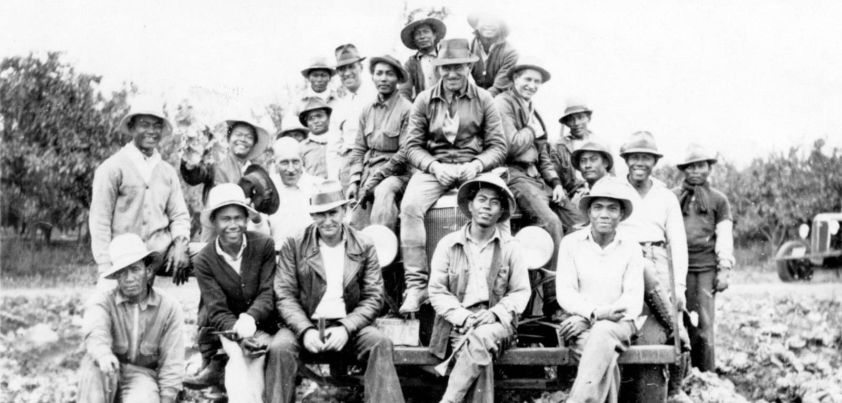 In this semi-autobiographical story by Carlos Bulosan, a letter written in English in need of translation links two themes: 1) The challenges (language barriers, racism, exploitation and mistreatment) faced by illiterate Filipinos who immigrated to America for a better life during the first half of last Century; 2) The harshness and unpredictability, especially for those on the land, of the life they left behind. Sadly, most of their families at home will rarely, if ever, hear from them again. Other themes include family, community, the importance of education, expectations vs. reality, resilience, perseverance. More…
Man from the South
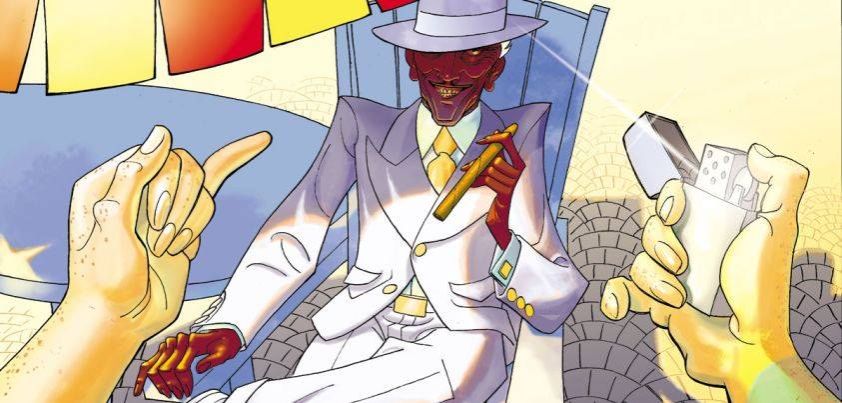 This story by Roald Dahl is about gambling, greed, appearances and ‘face’. A young man accepts what appears to be an easy bet. If he is successful, he will win an expensive car. If he loses, he must give up a small body part. Many reviews suggest that the English girl is not important to the story. I disagree. The young man was at first unhappy with the bet. If he was alone at the time, he could well have walked away. But this is not something a young sailor out to win a girl would do! More…
Lajwanti
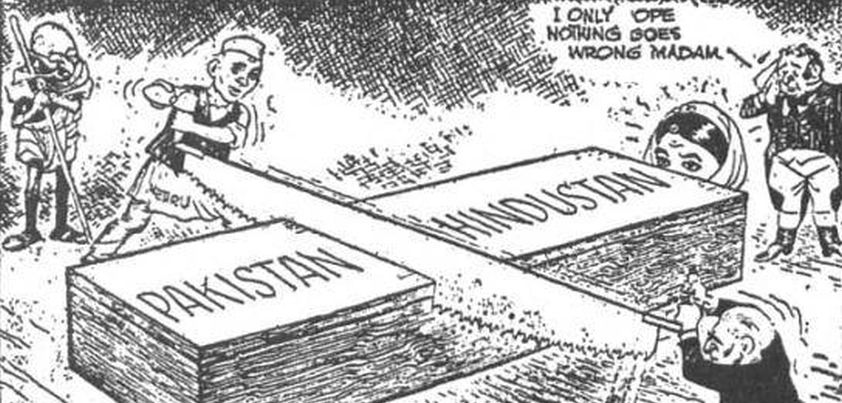 Thanks to a 2006 tele-film, this has become Urdu writer Rajinder Singh Bedi’s signature story. Set in the violent upheaval of British India’s 1947 partition, it follows Sunderlal, a Hindu activist whose wife, Lajwanti, is abducted into Pakistan. The ironic descriptions of domestic life (Lajwanti considered vicious beatings from Sunderlal “normal”, and appears confused by the kind treatment of her Muslim captor) highlight traditional Indian attitudes towards women at the time. A second irony is that although Sunderlal campaigns for the rehabilitation of abducted women, he refuses to discuss Lajwanti’s experiences with her, preventing both from finding closure. More…
Three Elephant Power
 Today’s story is by A. B. “Banjo” Paterson, a famous Australian writer best known for his poems and stories about life in the countryside around the time of the country’s independence from Britain in 1900. Despite the title, this story has very little to do with elephants. It is about boys and their toys (men and their cars), and is a wonderful example of Australian ‘bush humor’. Part of the story is about the exploits of a speed-loving chauffeur named Henery, who tries to catch a car that has left the biggest set of tyre tracks he has ever seen. More…