 In this coming-of-age story by Budge Wilson, a seventh-grade girl flourishes under a flamboyant English teacher. Inspired by the teacher, she learns to endure problems at home by writing metaphors. Four years later, she has the same teacher in high school. The unruly tenth graders constantly humiliate the poor woman, who has difficulty coping. Rather than acknowledge their past or offer thanks for her help in seventh grade, the girl ignores her. When the teacher dies in a tragic after-school accident, the devastated teen copes with her guilt by writing a metaphor. Themes include identity, peer pressure, guilt, self-realization. More…
The Sheriff’s Children
 In this story by Charles W. Chesnutt, a highly respected sheriff with a strong sense of duty protects an alleged murderer from a vigilante mob. He later learns that the prisoner, a mixed race former slave, is his son by a slave woman he had once owned. Believing his son to be innocent, the sheriff faces a dilemma. Should he do his duty (keep him safe until his trial and almost certain hanging) or take responsibility for his welfare (let him ‘escape’)? Themes: race and racism, frontier justice, slavery, identity, regret, duty vs. responsibility. More…
The Egg
 This dark comedy from Sherwood Anderson follows a contented farmhand and his ambitious wife who, after starting a family, decide to pursue the American Dream. In their first venture, a chicken farm, everything that can go wrong does go wrong. More troubles follow when they move closer to town and open a diner. The stressed husband tries to help business by being someone he is not (an entertainer), and ends up “with egg on his face”. The egg, which usually symbolizes the cycle of life, is for them a symbol of the cycle of poverty. Other themes: death, isolation, hope. More…
In the Garden
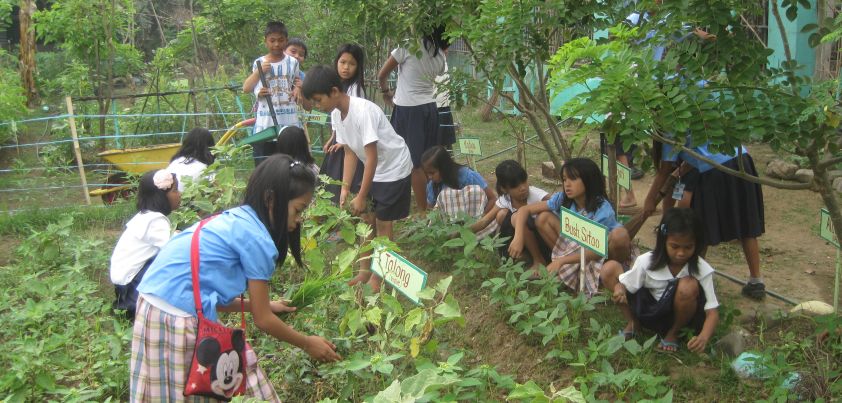 Set during the Philippine’s Marcos dictatorship, this story by Jose Dalisay Jr. takes place in the garden of an isolated one-room school. As the children tend their vegetables, a group of soldiers appears and begins to pull them out. Their orders are to take or destroy all local food sources in retaliation for the killing of one of their number. The younger children are sent home, but the oldest (a fourteen-year-old girl) is ordered to stay to “cook and do the soldier’s washing”. Bravely, the teacher insists on staying with her. Themes include innocence, oppression, intimidation, helplessness, fear, responsibility, courage. More…
Train
 In this story by Joy Williams, a sensitive, compassionate girl (Dan) rides a long-distance train with the family of a rude, cynical, self-absorbed friend (Jane). The two ten-year-olds spend much of the time walking through the train interacting with Jane’s argumentative, pretentious parents and other passengers. Dan, who has problems of her own at home, “comes of age” as she realizes the world is not always a happy place, and that Jane is unfit to be her friend. Surprisingly, Jane’s father seems to have a similar opinion of his daughter! Themes include friendship, family dysfunction, conflict, loneliness, epiphany. More…