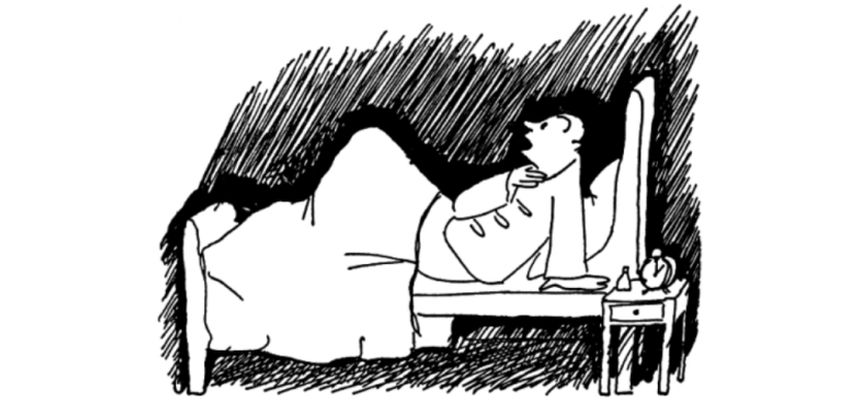
 These two light-hearted comedies from James Thurber involve the same house, the same family (notionally Thurber’s), the same attic bed, and the same message common in slapstick humor: Things aren’t always as they initially seem. In the first story, confusion over the location of a collapsing bed results in chaos in the house. In the second, ghostly sounds in the night extend the pandemonium to involve a neighbor and the police. Both stories include themes of memories, eccentricity, paranoia, misunderstanding and mayhem. The Night the Ghost Got In includes additional themes of the supernatural and responding to the unknown. More…
Diary of a Madman
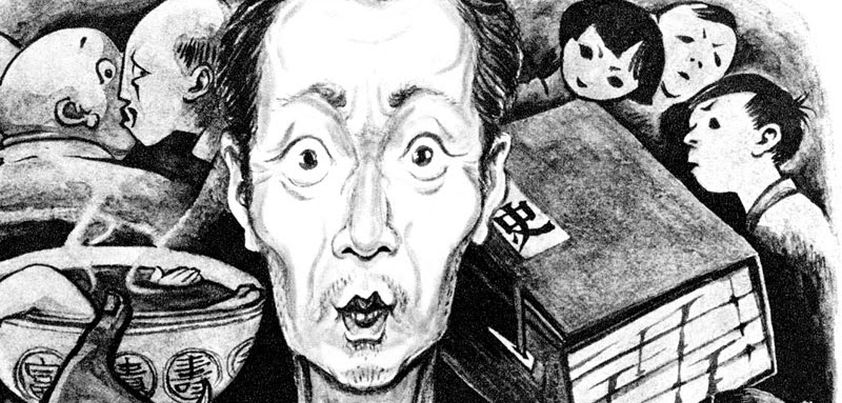 Lu Xun‘s diarist suffers from paranoia, stemming from strange looks he thinks he is getting from fellow villagers. On learning of an act of ritual cannibalism in a neighboring village, he concludes that those around him, including his own brother, are planning to make a meal of him. The story has several interpretations. The most common is that it satirizes the outdated Confucian traditions of Chinese feudal society. An opposing view is that it cautions the May Fourth period’s New Culture Movement against indiscriminately overturning (eating) all past traditions. Themes: madness, cannibalism, tradition, betrayal. More…
Rex Ex Machina
 The Latin phrase used as the title of this story by Frederic Max gives away a little about the plot. Rex Ex Machina translates as King from Machine. The story comprises a letter from a dying man to his only son. There is nothing at all sentimental about the letter… the word “love” isn’t even mentioned! Rather, it explains something that the man has been hiding from his son for almost forty years. It tells how he had once trained as a spy and been sent on a top-secret mission to destroy a machine that threatened the free world. More…
Strawberry Spring
 In this story by Stephen King, a serial killer stalks women in a small college community. The murders, which always take place at night, become increasingly vicious. Set in a rare false (strawberry) spring, thick fog provides perfect cover for the killer. Panic sets in as students realize the killer could be anyone on campus. When the weather breaks, the murders stop. Eight years later, during the next strawberry spring, they begin anew and, in a memorable twist, the narrator thinks he knows the identity of the killer. Themes include violence, fear, rumor and paranoia, confusion, memory, dissociation. More…
The Challenge
 Set in 1950s Peru, the major theme of Mario Vargas Llosa’s The Challenge is the Latin American concept of Machismo (being seen as a man among men). When a powerful street thug challenges a man from a rival group to a knife fight, the other accepts. He and his friends put on a brave face, even though they know he has little chance. The thug offers clemency as he begins to dominate the fight but the other refuses, preferring to die rather than admit defeat. Other themes include lawlessness, violence, rivalry, loyalty, honor. More…