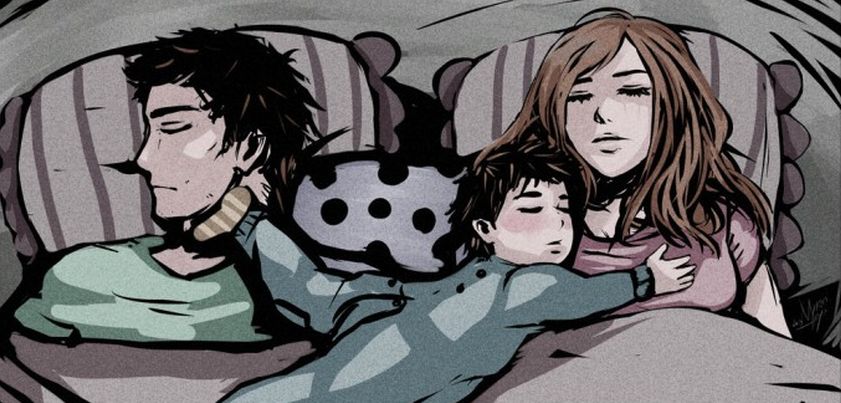
 The term Oedipus Complex has its roots in psychology and Greek Mythology. In this coming of age story by Frank O’Connor, a five-year-old boy’s ordered life and close attachment to his mother are disrupted, firstly by his father’s return from World War 1, and later by the birth of a baby brother. During the war, the boy’s father is a mysterious, occasional visitor to be prayed for. On his return, his father becomes a fierce rival for his mother’s attentions and later, a fellow victim of the newborn’s demands. Themes include childhood innocence and imagination, mother/father-son relationships, jealousy, anger, understanding. More…
Slaughter House
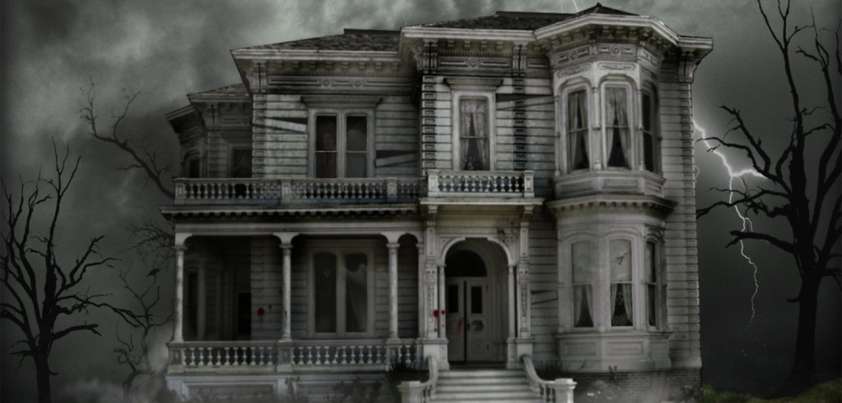 Richard Matheson fans may find Slaughter House hard going as he drops his normal crisp, easy to read writing style to experiment with the formality of mid-Victorian writing. The result: some very obscure vocabulary and long, pompously formal sentences that sometimes appear disjointed and confusing. The story itself is captivating. Two brothers, whose described relationship suggests a little more than brotherly love, fall for the lustful ghost of a young woman that enchants, has its way with, and then tries to kill them. Only one of the three survives! Themes include insanity, homoeroticism, seduction, jealousy, the supernatural! More…
Other People
 This Neil Gaiman is not for the fainthearted. Upon entering a room in Hell, a man meets the “demon” that will be his tormentor. After suffering excruciating pain from each of the 211 torture instruments lining the walls, he asks the demon what comes next. The answer: the true pain begins! And so it does for several thousand more years. In the last sentence, we learn why Gaiman agreed to change the title from his original choice (Afterlife) to Other People. Themes include sin and punishment, and the nature of Hell (suffering and inflicting dehumanizing pain and suffering). More…
A Sound of Thunder
 What is the most dangerous thing about time travel? According to this story by Ray Bradbury, it is doing some small thing that may change the future. Five men travel back in time to hunt a T-Rex. One of them panics when he sees the monster and steps off a specially prepared path. Because of this, they return to a very different world. The last thing the clumsy hunter hears is a sound of thunder. Themes include arrogance, cowardice, the dangers of technology, connections between past and present, democracy vs. dictatorship, the ethics of game hunting. More…
The Prisoner Who Wore Glasses
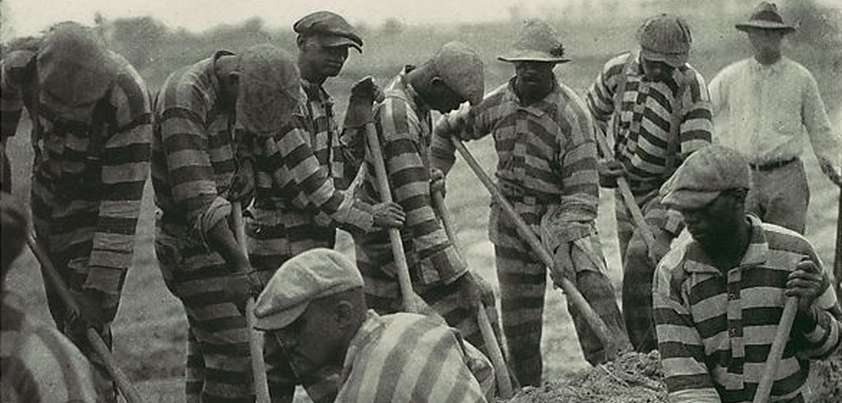 This story from Bessie Head is about a group of political prisoners who unite to survive the harsh South African penal system. Physically, the main character (Brille) is the weakest of the span of ten prisoners. This is reflected in his build, his clumsiness, and his poor eyesight. Brille compensates for these weaknesses with strength of character and insight. A beating from a warder helps him see that he entered politics for the wrong reason; it also shows him a way to manipulate the warder to improve things for the whole span. His glasses symbolize both weakness and perceptiveness. More…