 This J. D. Salinger story describes the relationship between members of a boy’s club (the Comanches), their youth leader (the Chief), and the imaginary hero of stories told by the Chief (The Laughing Man). One of the major themes is escape from reality through stories. In this context, the Laughing Man symbolizes the imaginary hero in all of us. Another important theme is change. Breaking up with girlfriend Mary results in the Chief “killing off” the Laughing Man, signalling to the boys that childhood pleasures (and life) don’t last forever. Other themes: appearance vs. ability, friendship, death, loss of innocence. More…
A. V. Laider
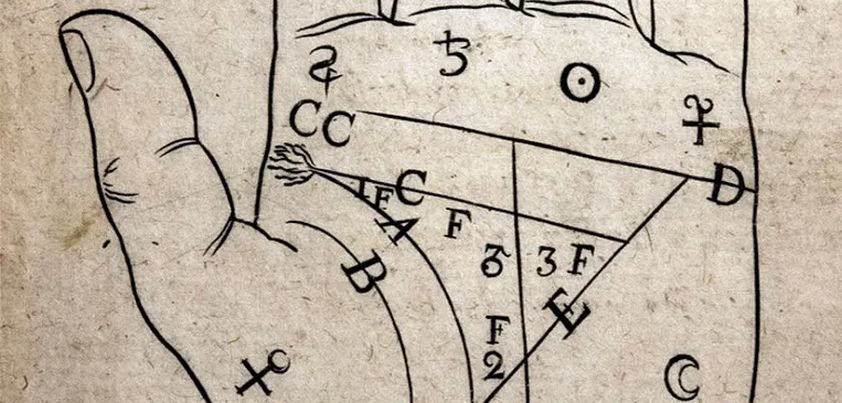 This story by Max Beerbohm raises the philosophical themes of faith vs. reason and free will vs. fate in the context of a conversation between the narrator and a stranger about palmistry. The stranger, a self-proclaimed amateur palm reader, relates how he once failed to prevent a train crash predicted in the palms of four fellow passengers. Too weak-willed to intervene, he let fate take its course and now feels guilty of murder. The sympathetic narrator writes him a consoling letter and, when the two meet again a year later, receives a nasty shock. Other themes include insecurity, guilt, fabulism. More…
The Man Who Could Work Miracles (A Pantoum in Prose)
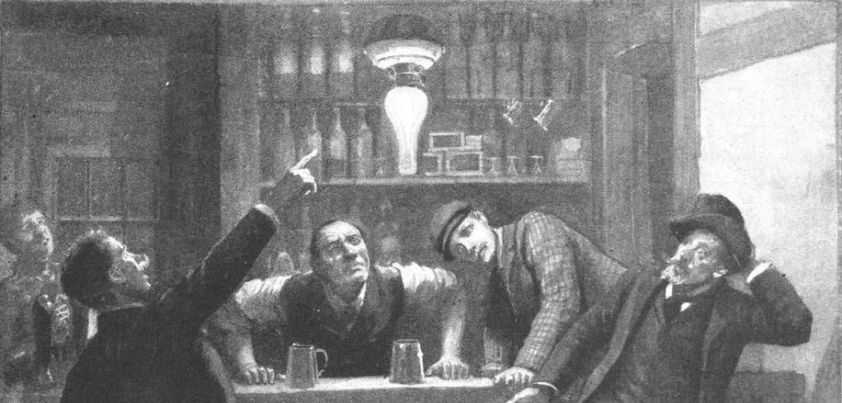 In this light-hearted story by H. G. Wells, a man known as a sceptic as far as miracles are concerned suddenly discovers he can make things happen just by thinking about them. After a few teething problems, such as sending a local police constable to Hades, he confides in his parish priest. Once convinced, the priest becomes so obsessed with using the miracle worker’s powers for good that he inadvertently encourages him to do something that brings about global catastrophe. Themes include the supernatural, power and responsibility, human frailty, the danger of interfering with nature, science vs. religion. More…
Old Love
 In this story by Jeffrey Archer, a couple go from rivalry-inspired hatred at first sight to literally being unable to live without each other. From the time they meet as Oxford undergraduates in the 1930s, a fierce sense of competition between the gifted pair spurs them on to topping their class, attaining coveted professorships, and earning royal honours. After tragedy brings them together, the caustic relationship morphs into a life-long love affair during which legend has it they were never apart for more than a few hours. Themes include competiveness, lasting love, literature and the arts, dedication, achievement. More…
The True Story of Kanakapala, Protector of Gold
 This “story within a story” from Raja Rao reads more like a reinterpreted folktale than a work of fiction. The unidentified narrator repeats a tale related by an old woman that includes elements of oral history, personal observation/interpretation, and gossip. The major themes of her story, which spans three generations, include piety, devotion, duty, greed, karma and the supernatural. The “glue” holding the story together is Kanakapala, a huge cobra that guarded a buried treasure bestowed upon Lord Shiva and the goddess Vishalakshi. Kanakapala literally “met its end” when its powers proved ineffective against rogue descendants of the treasure’s donor. More…