 Given the subject matter (a woman having difficulty coming to grips with a friend’s terminal illness), one would expect this Amy Hempel story to be a maudlin tale. However, the author’s minimalist style, interspersed with quirky humor, lightens the mood considerably without losing emotional impact. The major theme of the story is fear of death. This leads to avoidance. The protagonist visits her friend only once during her months in hospital. The two evade serious conversation, speaking almost exclusively about trivia and, instead of staying the night as expected, the friend hastens away. Other themes: friendship, abandonment, guilt, grief. More…
A Problem
 In this Anton Chekhov story, wealthy family members consider what to do about a nephew who has issued a false promissory note (IOU) in one of their names. Do they repay the debt to preserve family honor and avoid a scandal, or let justice take its course? On learning of the decision, the unscrupulous young man uses it to extort further money from an uncle trying to help him and, in the process, grudgingly admits an unfortunate aspect of his character. Themes: crime and consequences; justice/civic duty vs. family honor; nature vs. nurture, hedonism of the young upper-class, pride, despair. More…
Born Worker
 The main theme of this story by Gary Soto is that there is honor in honest hard work, and accordingly no shame in having a manual or menial job. It also deals with some common social stereotypes. On the one hand we have Jose, representing the hard-working, down-to-earth, family-oriented Mexican working class; on the other, Arnie, representing an exploitative, materialistic, entitled Mexican middle class. Soto contrasts Jose’s hard work with Arnie’s fast-talking attempts to get a “free ride”. Jose bears his sun-darkened Mexican looks proudly; Arnie prefers to claim French heritage and a “Portuguese or Armenian” complexion. More…
King Thrushbeard
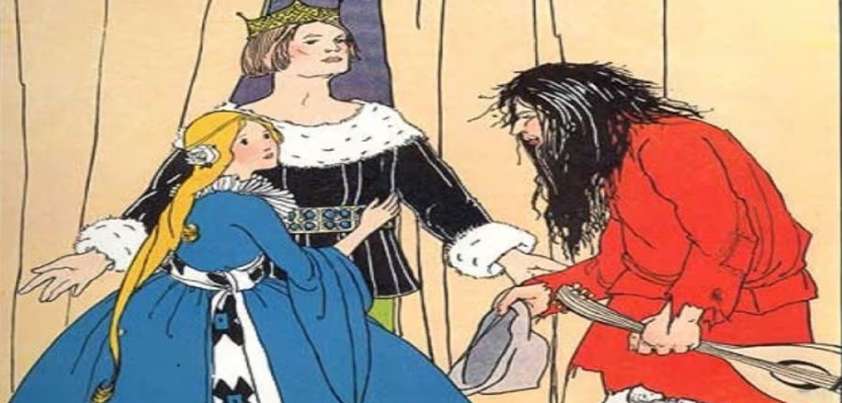 The Brothers Grimm would have us believe that this folktale teaches a valuable lesson by documenting the fall of a spoiled princess who judges potential suitors by looks alone and is so ill-mannered that she says cruel things about them to their faces. Through her punishment (being married to a beggar street musician), we also learn that she has almost no household or practical skills. I’m not sure though about the central idea that the best way to teach humility is to publicly humiliate a person. Isn’t this what the princess was punished for at the beginning of the story? More…
Rules of the Game
 The title of this story by Amy Tan refers to both the game of chess and the game of life. A Chinese-American mother’s term for one important rule is the art of invisible strength (self-control). The story deals with a number of themes: poverty, respect (for parents, others and one’s cultural heritage), pride vs. humility, passion and dedication, and mother/daughter relationships. At the end of the story, both fail in exercising the art of invisible strength. The mother’s understandable pride leads to bragging; the daughter’s response is rudeness and running away. Whose wind (willpower) will blow the strongest? More…