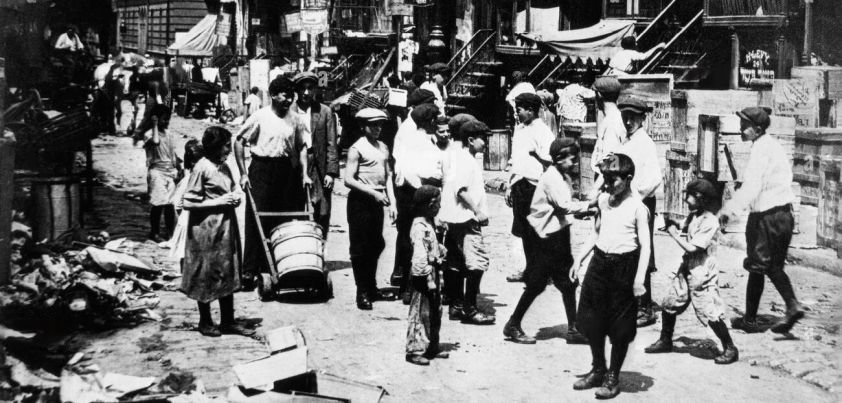
 This story by O. Henry takes recent events in America, where parents have been found partly responsible when their child commits murder, to a new level. A young man boasts to friends that he will teach his fiancée a lesson by taking another girl to a dance. The fiancée makes good her promise to kill him if he does, then flees and commits suicide. A heavenly court absolves her of the crime, blaming a red-haired, unshaven, untidy man, sitting by a window reading while his children play in the streets.. Themes include guilt and innocence, parental neglect, love, betrayal, redemption. More…
The Street-sweeping Show
 This story by Feng Jicai provides an insight as to how Chinese bureaucracy functioned under the Mao regime. A town Mayor, surrounded by groveling officials, puts on an artificial media show to be seen supporting National Cleanup Week. The event needs no publicity, as the town’s population is already out sweeping the streets. Moreover, the carefully choreographed newspaper and T.V. shoot is held in the Central Square, which has already been swept clean. When the Mayor’s grandson points out that he is on TV, he comments: It’s not worth watching! Themes include social class, propaganda, media manipulation, appearance vs. reality. More…
The Daffodil Sky
 In this story by H. E. Bates, a man sent to prison for killing a love rival in a jealous rage returns to the scene of the crime. His intent is to confront the woman they were fighting over, who was once his fiancé. As he knocks on her door he has a premonition that if she opened the door he might not be able to restrain himself but would rush straight at her and kill her. Fortunately for him, the person who opens it is a pleasant surprise. Themes: passion, jealousy and rage, choices and consequences, alienation and loneliness. More…
Aftermath
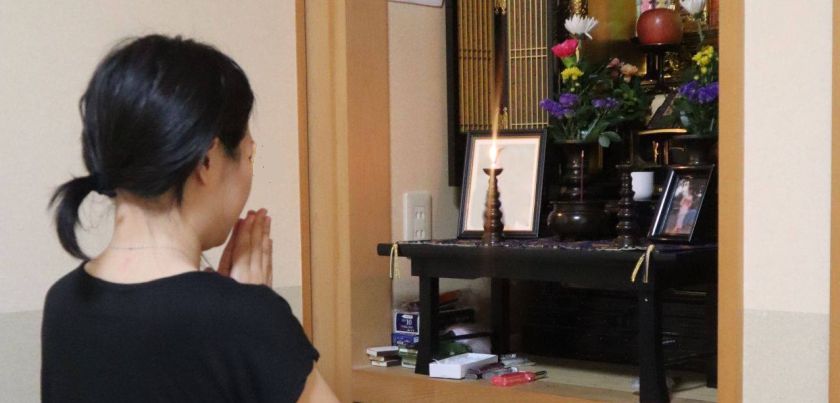 This story by Mary Yukari Waters deals with several often overlooked aspects of war: its effect on the families of those who don’t return, the resultant scarcity of basic necessities, and the impact of occupational forces on the lives of the loser. In the aftermath of World War 2, a young Japanese mother struggles to deal with the loss of her husband, her young son’s growing Americanisation and dimming memories of his father, and the fundamental shifts taking place in Japanese society. Themes include loss, grief, memory, customs and tradition, motherhood, change. More…
The Homecoming Stranger
 In this story by Bei Dao, a young woman in 1970s China has difficulty dealing with her father’s homecoming after being falsely convicted of literary crimes and spending twenty years in prison. She feels resentment, not only over what she sees as his ‘desertion’, but also over her mother standing by when she was imprisoned and tortured at age twelve. Fortunately, on coming to understand her father’s love and the courage he had showed, she realizes her selfishness and they reconcile. Themes include the unfairness and brutality of the Mao regime, resentment, hypocrisy, rejection, fatherly love, courage, selfishness, forgiveness, reconciliation. More…