 Lorrie Moore’s protagonist Zoë is a small-town college professor. She is a free-spirited, “almost pretty”, emotionally troubled woman whose efforts to forge relationships without being a “Heidi” have achieved the opposite. Her witty, cynical one-liners have alienated colleagues, students and suitors alike. Central themes are loneliness, the expectations of men, and the role of sex in relationships. An offensive, misogynistic “big city” blind date confirms her misgivings about marriage; a medical scare and consequent thoughts of death bring into focus what she sees as the futility of her life. Other themes: isolation, alienation, appearance, gender roles, mortality, nihilism. More…
Philomel Cottage
 This romantic story with a deadly twist is one of Agatha Christie’s lesser-known tales. Shortly after newly-weds Alix and Gerald move into secluded Philomel Cottage, Alix hears some disturbing news from the gardener. Gerald’s angry reaction when she asks him about it makes her realize how little she really knows about him. She sets out to fill in the gaps and discovers a trail of bigamy, swindling, murder, and escape form prison. Sensing danger, some quick thinking and a terrible-tasting new brand of coffee save her life. Themes include love and romance, manipulation, isolation, innocence, curiosity, fear, and the supernatural. More…
A Choice of Butchers
 In this confronting story from William Trevor, a seven-year-old boy is faced with several issues he is far too young to understand: a hard-drinking, overbearing father he catches passionately embracing their maid; a monetary gift and unexpected good-night kiss from their soft-spoken, empathetic lodger; and a perpetually tired, unaffectionate mother who appears to passively accept her lot. Add to this that he is an “afterthought child” with both parents in their fifties and the question of why a butcher’s family would need a maid, and the story becomes an amateur psychological sleuth’s dream with some serious unstated themes. More…
The Revolt of “Mother”
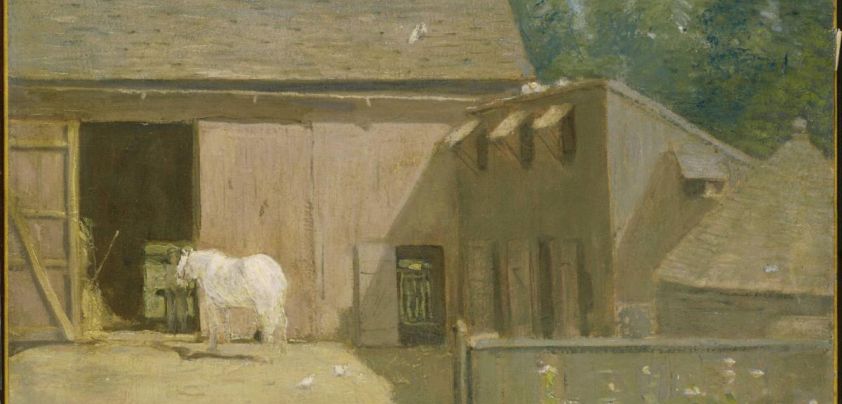 This Mary E. Wilkins Freeman story is an early example of American literary feminism. When Adoniram, an insensitive, authoritarian farmer decides to build a barn on the site of a promised new house and refuses to discuss the issue, his long-suffering wife takes a stand. Sarah, the hard-working and devoted “Mother”, sees his need to spend a few days away as a sign from God. Much to the surprise and amusement of the local community, she goes about turning the new barn into a home. Themes: gender roles/repression (male domination), insincerity (false promises), spirituality, rebellion. More…
The Jay
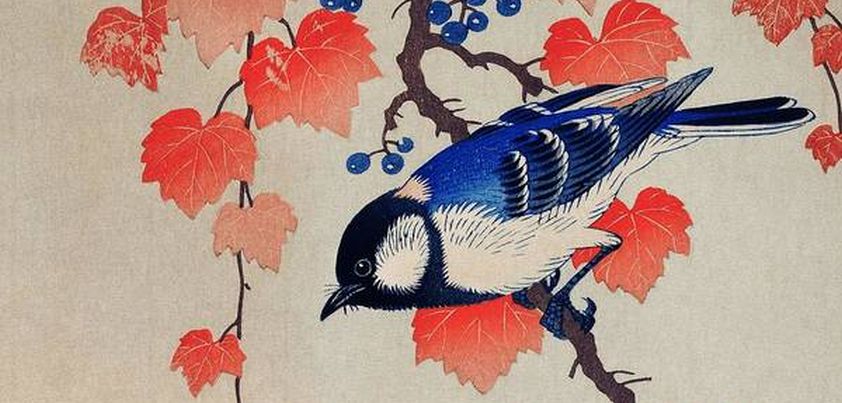 The Jay is one of Yasunari Kawabata’s famous Palm-of-the-Hand Stories. A small bird is causing a fuss because it can’t find a lost chick that has fallen from its nest. A young woman about to enter into an arranged marriage also feels lost. She has never known her birth mother, who her father divorced when she was very young, and lives with her grandmother. Her father and stepmother are coming to visit with the mother of her fiancé. The major theme, exemplified by the bird, is the intensity of motherly love. Other themes: family, marriage, uncertainty, wisdom of the aged. More…