 This story by Kazuo Ishiguro is a farcical satire of a man trying to save his stagnating marriage. He manipulates a mutual friend living overseas into providing company for his wife while he is away on business. The friend has achieved little in life and the husband hopes that the contrast will make his wife appreciate him more. A hilarious sequence of events unfolds as the friend tries to cover up damage he caused to the wife’s appointment book after reading unflattering entries about himself. Themes include friendship, alienation in marriage, manipulation, sacrifice, disappointment, the power of music, memories, regrets. More…
The First Seven Years
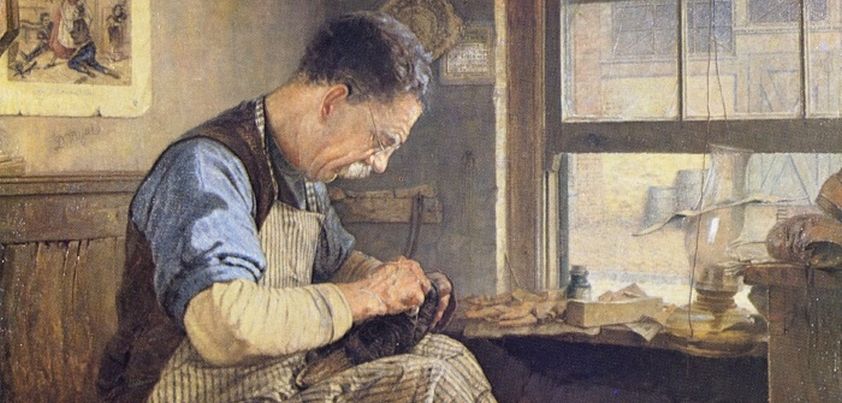 The major theme of this story from Bernard Malamud, with its allusion to the biblical tale of Jacob and Rebecca, is materialism vs. spiritualism. An aging, ailing shoemaker is excited to identify a potential suitor with good financial prospects for his nineteen-year-old daughter. His dreams are shattered when the girl, an avid reader of the classics, rejects the man as being a materialist with “no soul”. He later experiences an epiphany upon learning that she already shares a romantic interest… with his equally sensitive but poorly educated, much older workshop assistant. Other themes: insensitivity, independence, self-learning, worldliness vs. love. More…
The Scholarship Jacket
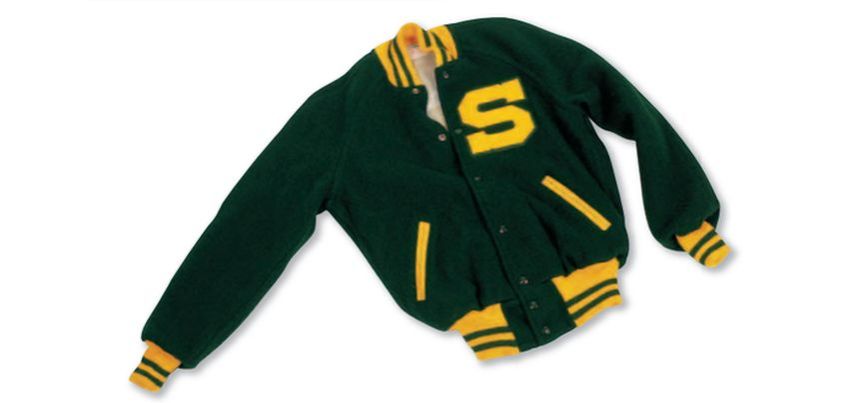 This story by Marta Salinas is about prejudice, privilege and hope. Martha is 14 and about to enter High-School. Her parents are very poor, so she lives with her grandparents. Marta gets top grades, and wants nothing more than for this to be recognized by winning the Grade 8 Scholarship Jacket. She is devastated when she hears two teachers arguing about whether the jacket should go instead to a lesser student whose father is on the School Board. When Martha explains the problem to her grandfather, his answer proves that you don’t need a formal education to acquire great wisdom. More…
Tom Tit Tot / Rumpelstiltskin
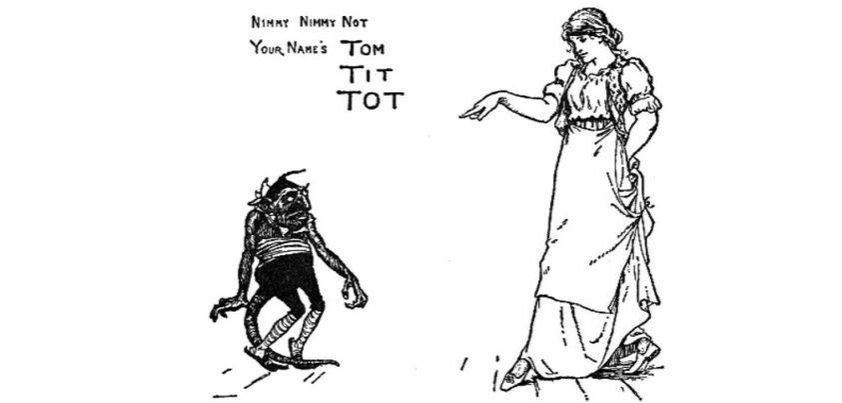 The protagonist in Tom Tit Tot is a lazy girl who doesn’t appear to be good at anything except eating. Her mother lies to the king by saying she is a whiz with the spinning wheel. For some reason this is just the kind of girl the king is looking to marry. The poor girl can’t even spin a top, so in order to avoid losing her head she accepts an offer of help from a small magical creature. As the creature helps the girl, she must try to guess its name. If she can’t, she shall become “its”. More…
Big Blonde
 This rather depressing story from Dorothy Parker exposes the different socioeconomic standing and sexual standards applicable to men and women in 1920s America. The protagonist (Hazel) falls from being a popular plus-size model to a depressed middle-aged alcoholic. The cause of her decline lies in extreme moods that sour relationships with her husband and the other hard-drinking men in her life. Forced into a demeaning series of casual affairs with married men who pay her keep in expectation of sexual services, she sees only one pathway to lasting peace. Themes: body image, vulnerability, sexual exploitation, loss of identity/self-esteem, depression, alcoholism. More…