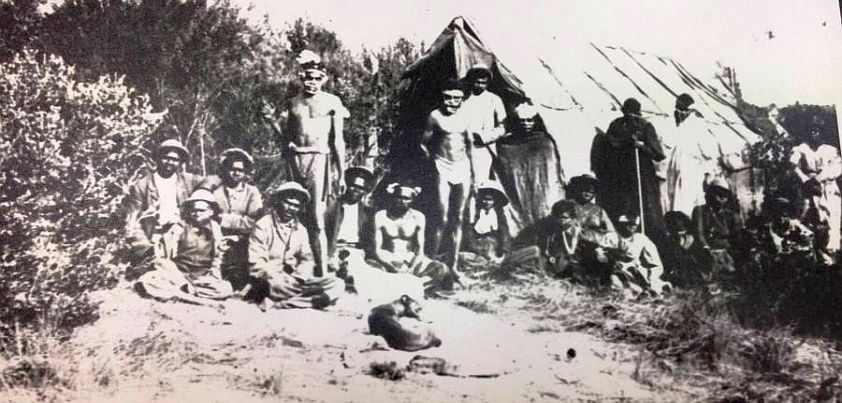
 This Thea Astley story is set during period of the Stolen Generations: sixty-years over which up to 100,000 Australian aboriginal children were forcefully removed from their families, placed in missionary schools, and trained to work in white society. Although the story recounts an aboriginal mother’s desperate attempt to save her child, a major theme is the strong connection her people have to “home” (their clan and land). When a white farming family offers her a safe haven away from the wretched camp she lives in, her answer is Not same. Other themes include racism, brutality, family, motherhood, courage, compassion. More…
The Green Door
 This story by O. Henry provides a mix of adventure, mystery, romance and humor. By day, Rudolf Steiner lives a normal life working in a piano store. At night, he walks the streets looking for adventure. One night, adventure calls in an unusual way. A man standing outside a building hands him a card containing the words: The Green Door. Rudolf goes inside and knocks on the only green door he can find, leading to a series of events that could change his life. Themes include the nature of adventure (risk vs. rewards), chance vs. fate, romance. More…
Eyes of a Blue Dog
 This story from Gabriel Garcia Márquez takes place in the narrator’s mind. While in a dream state, the man’s unconscious reflects his lack of connection in the real world by conjuring up an ongoing relationship with a woman in which each desires the other but they cannot touch. In the man’s absence, the woman wanders the city searching for him, calling out and writing Eyes of a Blue Dog, code words by which they will recognize each other. When awake, the man has no recollection of the dreams. Themes include loneliness and isolation, love and desire, frustration, longing, connection. More…
The Looking-Glass
 In this story by Anton Chekhov, a young woman dreams 24/7 about getting married and settling down with the perfect man. One night, while sitting in front of her looking-glass, she has a vision of what the future may hold. She sees the reality of living and raising a family in rural Russia in the late 1800s. The vision encompasses many of Chekhov’s common themes: love, hope, disease, fear, financial struggle, the challenges of parenthood, death and despair. The woman’s cry of Why is it, what is it for? introduces a final theme: disillusionment. Her dream has become a nightmare. More…
This Way for the Gas, Ladies and Gentlemen
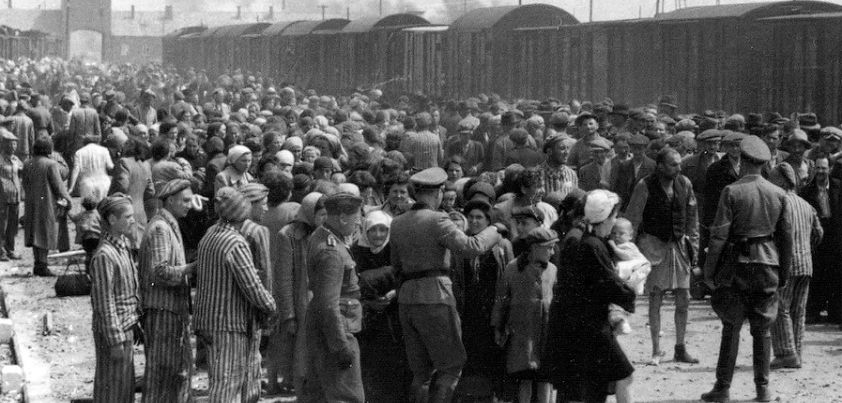 This almost clinical account of Tadeusz Borowski’s holocaust experiences explores an often overlooked aspect of the so-called “final solution”: how general prisoners forced to assist in sending the condemned to gas chambers became so desensitized to the brutality that many actively participated in it. Because of their access to discarded food and clothing, these men formed the “elite” among the prisoner hierarchy. In camp, their insensitivity to suffering prevailed and many looked down on and showed little compassion for the plight of “less fortunate” fellow inmates. Themes: man’s inhumanity to man, death and suffering, the survival instinct, detachment, guilt, rationalization. More…