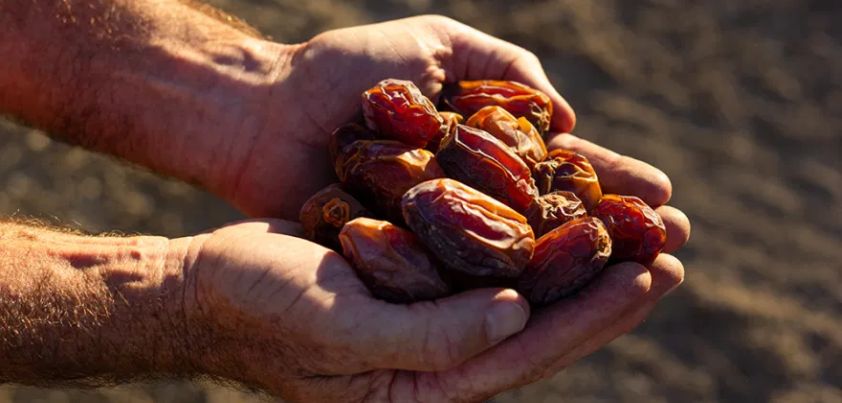
 This story by Sudanese author Tayeb Salih is about a young boy’s relationship with his grandfather. They were initially very close, and the boy idolized the old man. In a “coming of age” event, the boy realizes that his grandfather has become rich and powerful by taking advantage of the misfortune of others. The boy feels especially bad for a neighbor who has lost most of his land to his grandfather. His grandfather is determined to own the rest of the land, and is part of a group of moneylenders who take away most of the neighbor’s annual date harvest. More…
Slave on the Block
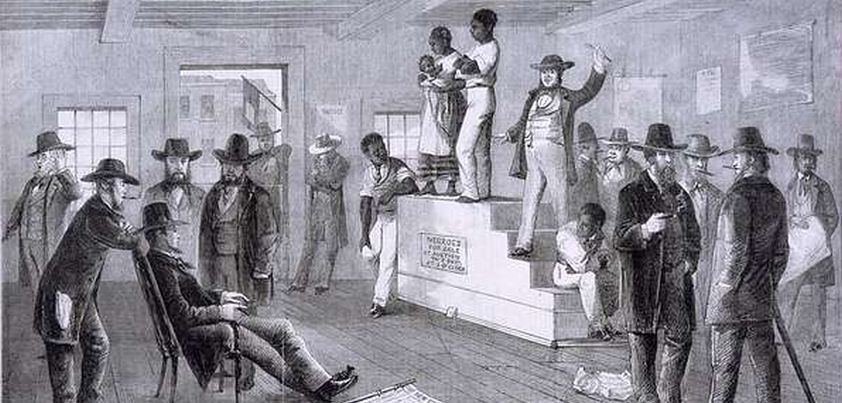 This early Langston Hughes story satirizes attitudes toward African American music and culture during the Harlem Renaissance. A wealthy, artistic couple seek to improve their social status through paintings and music inspired by their African American servants. Although superficially respectful of the servant’s African heritage, they privately exhibit a condescending tone towards these natural, childlike people who should be left unspoiled and simply enjoyed. A young negro, fresh from the south, learns to manipulate the patronizing couple before orchestrating a metaphorical bid for “freedom”. Themes: freedom vs. slavery, the beauty of black music and art, moral superiority, suppressed desire, racism. More…
The Khaki Coat
 This story by Nhat Tien is a satirical criticism of the heavily regulated early days of the Vietnamese socialist government. The lack of social equality and opportunity is reflected in the life of a girl who supports her younger siblings by hawking items she digs up in graveyards. She is arrested when a widow recognizes the fashionable khaki coat her husband was buried in. However, she is soon free again after arguing in court that her actions were consistent with Communist ideology. Themes include social equality and opportunity, family, poverty, survival, superstition.
More…
A Change of Aunts
 In this story by Vivien Alcock, eleven-year-old Meg and eight-year old William are horrified when their kindly Aunt Janet gets married and is replaced by wicked, cruel Aunt Gertrude. William’s greatest fear is that Gertrude will find out about the short cut to town that runs past the haunted pond in Teppit’s Wood. Everyone knows the story of the ghost but, of course, most adults don’t believe it. His fear is realized when late one evening Gertrude forces the two children to accompany her home through the woods. It turns out to be the last mean thing she ever did! More…
The Thakur’s Well / Thakur Ka Kuan
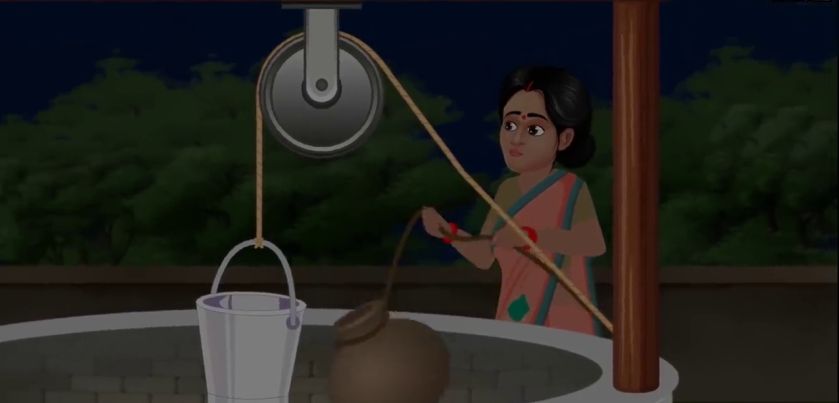 This poignant story by Premchand highlights the degrading treatment of Dalits (untouchables) under India’s caste system.A woman brings water for her sick husband from the only well in the village available to Dalits. It is contaminated and has a foul smell. She doesn’t know that boiling will purify the water, and decides that her only option is to risk a severe beating by secretly drawing water from the well of the high-caste Thakur, who forbids low-caste villagers from using it. Themes include social class, discrimination, poverty, courage, gender roles, corruption of the upper classes. More…