 The major themes of this very funny story by Paul Jennings are practical jokes and consequences. Young Andrew learns that his father’s boss is coming to dinner. When he overhears his parents making a pact not to criticize his table manners during the meal, he decides to put them to the test. And just in case it looks like they will be able to keep their promise, he hides a ‘secret weapon’ under the table that is sure to make them angry. The secret weapon works, but Andrew hadn’t thought about what problems this might cause for his father’s job. More…
The Rockpile
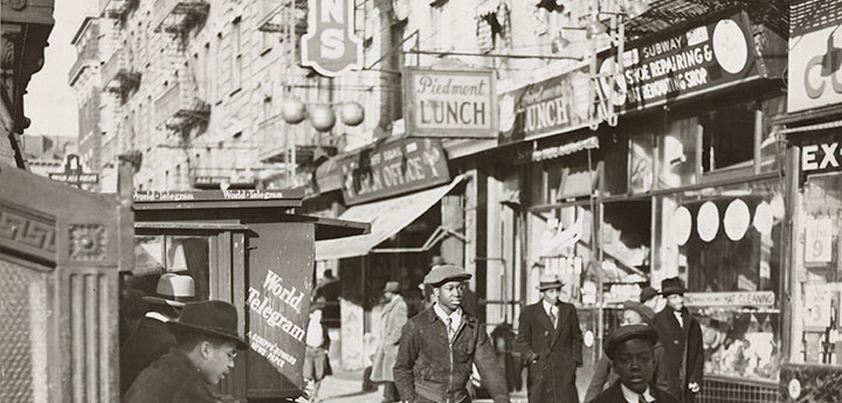 This partly autobiographical story from James Baldwin explores aspects of African-American life in Depression-era Harlem. It contrasts religious zeal with violence and division in the community. In addition to the violence taking place in the children’s “gang” skirmishes on the rockpile, a climate of fear and intimidation exists in the protagonist’s household. Religion is presented not as an uplifting faith that gives meaning to life, but rather something to be feared and obeyed, and through which people are automatically classified as either “redeemed” or “wicked”. Themes: religion, fear, obedience/temptation, choices and consequences, alienation, motherly love. More…
The Goophered Grapevine
 Set shortly after the American Civil War, this story from Charles W. Chesnutt is about a “Northerner” with an interest in grape cultivation who moves to the South for his wife’s health. While inspecting a derelict vineyard, they meet a “colored man” who tells how the previous owner had a sorceress put a spell (goopher) on the grapes to stop them being stolen. He then describes the sad fate of a newly acquired slave who, unaware of the spell, “sampled” the grapes. Themes: racism and slavery, the supernatural, greed, exploitation, dishonesty, trickery, karma. More…
The Magic Sweet Shop
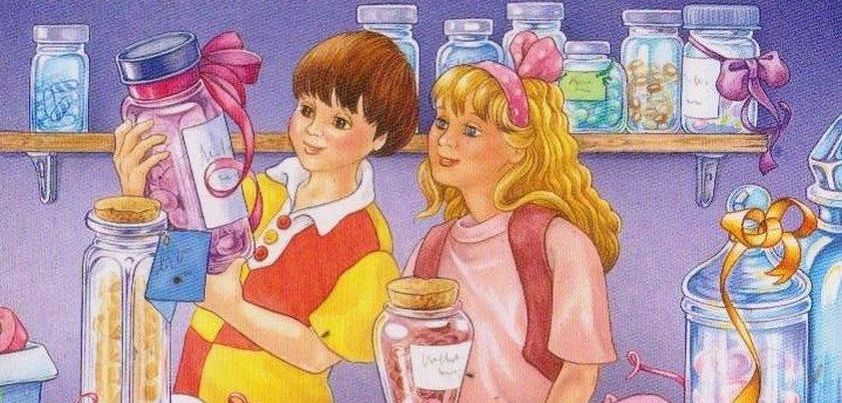 In this story by Enid Blyton, two children out playing in the woods follow a path they had not seen before. It leads to a small village in which there is a strange candy shop. They each buy five different colored sweets with unusual names: a Giant-sweet, Dwarf-sweet, Invisible-sweet, Spiky-sweet and Home-again-sweet. They then have some exciting adventures in which the candy they bought saves the day. As might be expected, the Home-again-sweet leads them home. When they take their mother to the path that led them to the village, they find that it is no longer there. More…
The Voice of Death
 In this Romanian folktale, a rich man thinks how terrible it would be to die and have to leave all of his money behind. He sets out to find a land where people do not die. Finally, he comes across a country where the word death is unknown. Instead of dying, people simply follow a strange voice and never return. The rich man is sure that he is strong enough to resist the voice. He moves there with his wife and family, only to learn the truth of the English idiom: Nothing is certain in life but death and taxes. More…