 Last year (2020) Haruki Murakami released Confessions of a Shinagawa Monkey, a sequel to his 2006 story, A Shinagawa Monkey. Both deal with a talking monkey who steals items showing the names of women to whom he is attracted. By concentrating on these, he absorbs aspects of the women’s identity. Although this satisfies the Monkey’s desires towards the women, it causes them to forget their names. The monkey is a symbol for all the lonely, often overlooked people in society whose circumstances make it difficult to find love. Other themes: envy; suicide; confronting and sharing concerns; reaching out for help. More…
Everything is Nice
 In this story by Jane Bowles an American woman living alone in a Moroccan hotel is befriended by a Moslem woman who appears to know a lot about her movements. On the pretext of taking her to a wedding, the Moslem woman leads her to a dimly lit room where a group of other Moslem women ask probing questions about her life and presence in the city. Uncomfortable about the personal nature of the questions, she rudely refuses their offer of refreshments and abruptly leaves. Themes include women’s independence, identity, isolation and loneliness, cultural division. More…
You Were Perfectly Fine
 This entertaining “morning after” story by Dorothy Parker describes an embarrassed young man’s reactions as he tries to piece together what happened the night before. The beauty of the story is that, depending on how the reader interprets the dialogue, it can be taken several ways. One is that the woman is exaggerating or even making up events to teach the man a lesson. Another is that the events are true but she is playing them down because she wants to believe something he said during the cab ride home. Themes include alcohol abuse, memory, relationships, guilt, happiness and regret. More…
Yellow Fish
 On the surface, this story by C. S. Lakshimi (aka Ambai) is about a grieving mother who arranges the rescue of a discarded fish dying on the shore because its struggles remind her of those of her premature baby Jalaja before she died. The story also reflects the cycle of life (the vibrant colors and frenetic activity associated with return of the fishing fleet), death (Jalaja’s passing and the yellow fish flapping on the sand) and rebirth (the fish’s return to the sea). Themes include loss, grief, insensitivity, maternalism, the cycle of life. More…
A Child’s Dream of a Star
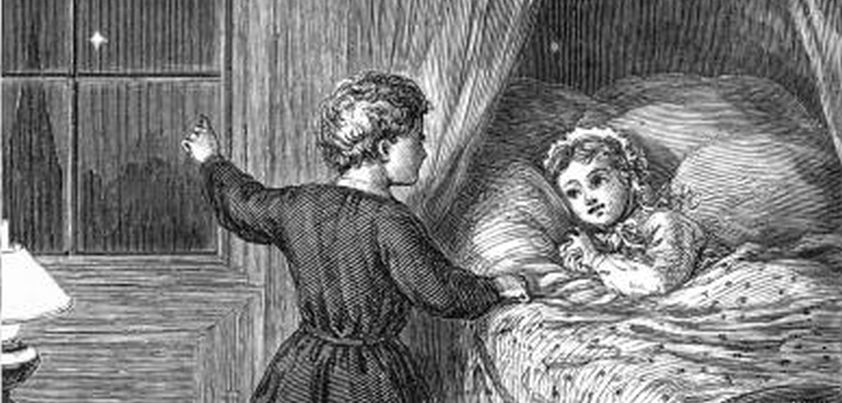 A major theme of this heart-warming 19th Century children’s story from Charles Dickens is what comes after death. Although children today are more likely to have been exposed to the concept of the hereafter than their 1871 counterparts, the story is still used as a reading text in many grade schools. In addition to being a beautifully written piece of prose, it contains several other important themes. These include: 1) the wonder and interdependence of the natural world; 2) brother & sisterly love and devotion; 3) the importance of family; and 4) how life can sometimes seem unfair. More…