 In this horror story by Elizabeth Bowen, a woman returns to her large, war-damaged city house to collect personal items. The house had been locked up, nobody knew she was coming, yet there is a letter addressed to her sitting on a table. It had been hand delivered earlier that day and is an anniversary greeting ending with the words: You may expect me at the hour arranged. Someone (possibly the spirit of a former soldier-lover) may be in the house or coming for her. Themes include the trauma of war, gender stereotypes, doubt, imagination and fear, betrayal and revenge. More…
Safety of Numbers
 One of the appeals of this story by Lucy Tan is that versions occur in immigrant families all over the world. Parents, who have known hardship and in some cases suffered under corrupt or authoritarian regimes, find a home in a new country. There, they drive their children hard to get the best possible start in life. The children, like the protagonist in this story, don’t fully understand their parents’ experiences and rebel against the added pressure. Mutual understanding often doesn’t come until the children experience and overcome their own challenges in life… which may be too late. More…
Waldo
 In this science fiction fantasy by Robert Heinlein, Earth needs help from “Waldo”, an eccentric genius born with degenerative muscle weakness. Angry at mankind after being cheated out of a ground-breaking invention, Waldo lives as a recluse in a gravity-free home in orbit above the planet. Earth’s problem is a series of physically impossible breakdowns in “deKalbs”, radiant power receptors used to power everything from vehicles to cities. With help from a little magic, he not only solves this but also makes three other important discoveries. Themes: identity, conquering disability, self-reliance and independence, science vs. “magic”. More…
How My Brother Leon Brought Home a Wife
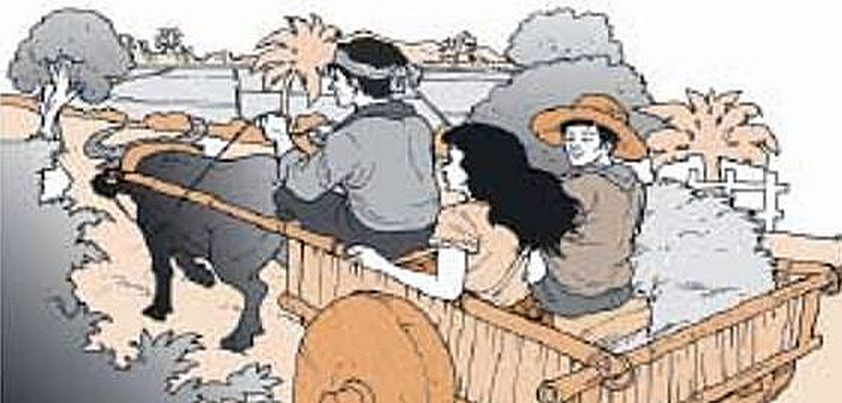 In this popular Filipino story from Manuel E. Arguilla, a son brings his city-based bride home to the countryside to “meet the family”, only to have the poor woman tested by his father before she even arrives. The father has his younger son meet them with a bullock cart rather than horse and carriage, and bring them home via a stony “short-cut” along a dry creek bed rather than the smoother main road. The apprehensive but charming girl (in high heels no less!) passes the tests with flying colors. Themes: love, fear, perseverance, patriarchy, reputation. More…
Flowering Judas
 The major theme of this story by Katherine Porter is betrayal. Other themes include alienation, fear, corruption, despair and guilt. Laura, an idealistic American schoolteacher who traveled to Mexico to support the socialist revolution has a sense of impending doom. Trapped by the unwanted attentions of the corrupt, adulterous revolutionary Braggioni and with no love for the Mexican people, she feels lost and alone. Braggioni’s lifestyle is a betrayal of both his socialist ideals and marriage. In working for a socialist cause, Laura betrays her Catholic faith. Her sexual repression could also be seen as betrayal of her womanhood. More…