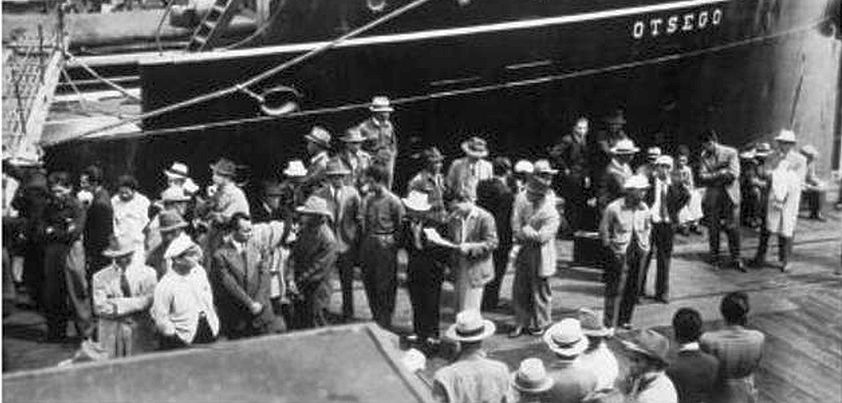
 This extract from Carlos Bulosan’s semi-autobiographical novel America Is in the Heart relates how, as a young man, he immigrated to America to start a new life. Upon arrival, he falls victim of a Filipino scammer and earns just $13 for three months’ work in an Alaskan canning factory. Later, he witnesses violence and death in a “Filipino” dance hall, and experiences camaraderie, friendship, and a racist gang attack on an apple farm. He must have asked himself several times: “Why Had I Left Home?” Themes include expectations vs. reality, exploitation, friendship, violence, racism, resilience, perseverance. More…
Aunty Misery
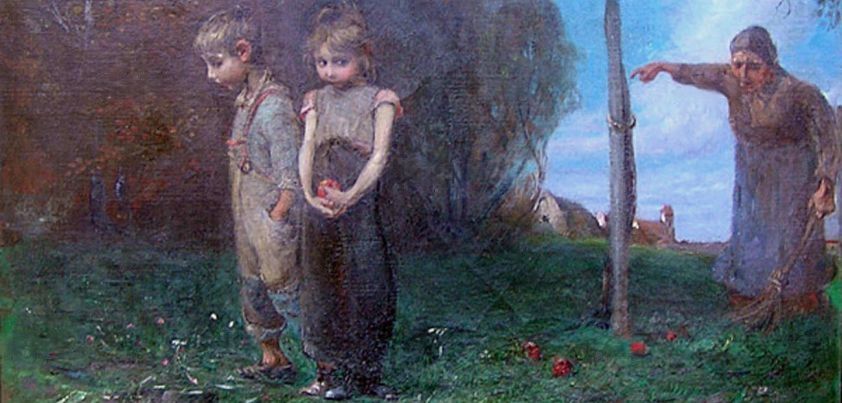 In this Puerto Rican folktale retold by Judith Ortiz Cofer, a lonely old woman has only one love… a beautiful pear tree growing outside her door. Her one hate is mischievous children who climb the tree and steal its fruit. A wish granted by a travelling sorcerer solves her problem with the children and, when Death comes for her, allows her to capture him. Her trick on Death causes so many troubles around the world that she finally releases him in exchange for immortality. The message of the story: there will always be misery and death in the world. More…
The Paper Menagerie
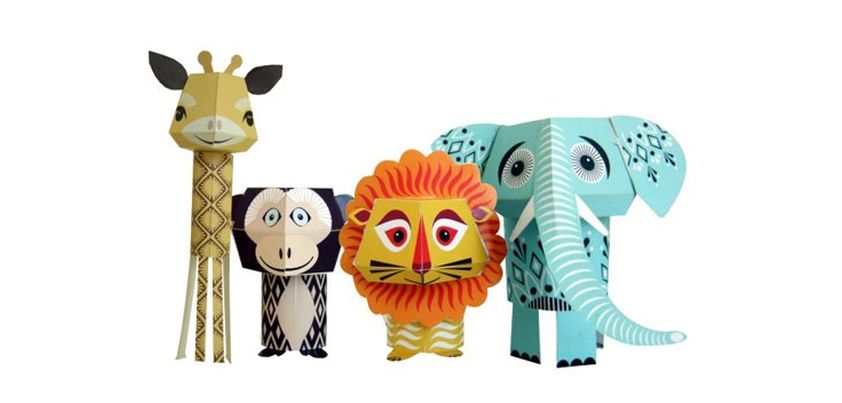 The central message of this poignant story from Ken Liu is in these lines: You know what the Chinese think is the saddest feeling in the world? It’s for a child to finally grow the desire to take care of his parents, only to realize that they were long gone. An American high schooler rejects his heritage and distances himself from his poorly educated, non-English speaking mother. After her death, he finds something that changes his outlook and brings back the magical world she had created for him as a child. Themes: struggle, cultural assimilation, identity, resentment, motherly love, imagination. More…
Drying Out
 Drying Out is from Cynthia Rylant’s book Every Living Thing, which contains several stories aimed at school-aged children about how animals can change people’s lives. In this story, the expression ‘Drying Out’ has nothing to do with water. Rather, it is an idiom which means for someone who is dependent on alcohol to stop drinking. The main character (protagonist) is a returned soldier whose life is ruined when he starts drinking too much after his wife leaves him. He is sent to a special hospital where some unlikely friends who visit every morning help him to overcome his problem. More…
Jeremiah’s Song
 A major theme of this story from W. D. Myers is the traditional role and modern demise of storytelling. The nine-year-old narrator and an older friend Macon are enthralled by his dying grandfather’s stories. The title refers to both the stories (which Grandpa Jeremiah refers to as the songs of my people) and the music composed by Macon while listening to them. There is an implication that through the power of music (especially the blues) some of these threatened stories/songs can live on. Themes: storytelling, change, family and community unity, death, music. More…