 This story by Banaphool opens with a young Indian woman dreaming about what might have been… the power and prestige that comes with a good education. The dream ends with her contemplating revenge on a man who had recently rejected her as a prospective bride. We don’t learn the outcome, because she wakes to the grim reality of her miserable existence. Despite excellent grades at school, her father denied her a tertiary education. As her poverty-stricken family desperately tries to marry her off, she takes drastic action. Themes include poverty, the importance of education, rejection, despair. More…
We Are All One
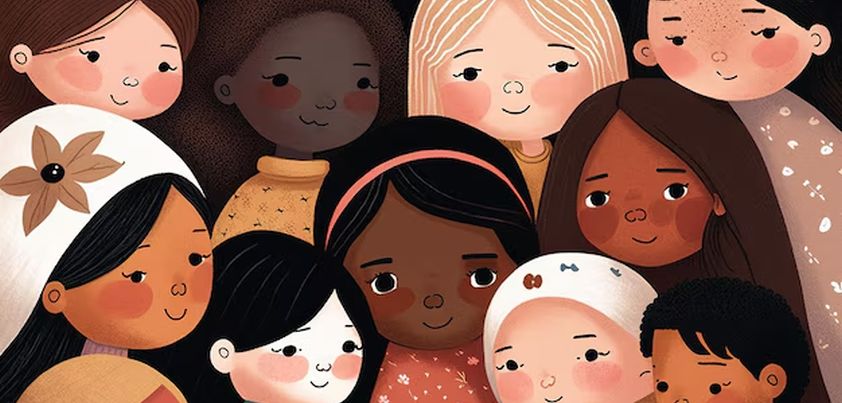 In this Chinese folktale retold by Laurence Yep, a rich merchant offers a large reward to anyone who can cure his painful eye disease. A poor candy peddler walks deep into a forest in search of a magical herb his mother had told him about. With help from a magical centipede and thousands of ants he becomes “One” with, he returns home with something better, earns the reward and lives happily ever after. The titular theme, that we are all one, conveyed an important social message to early Chinese immigrants in America. More…
The Veldt
 In this chilling story by Ray Bradbury, frantic parents who try to rein in their spoiled children by shutting down the hi-tech games room in their “HappyLife” home become a “HappyMeal”. Although written in 1950 to question the rising influence of television, the story serves as a warning to modern parents who let their children build their lives around social networking and/or game play. The story’s major theme is the alienation, dehumanization and breakdown of family values that can arise in a household through over-reliance on technology. Other themes include consumerism, poor parenting, illusion vs. reality, dystopia. More…
Snow
 On the surface, Anne Beattie’s Snow is a simple story about a woman’s recollections of a romantic winter in the snow-covered countryside. She doesn’t appear to be speaking directly to the man, so one wonders if she might be writing him a letter, looking at his photograph, or simply re-living events in her mind. The major theme of the story is nostalgia and the nature of memory. She recalls the good times they had together and a bitter-sweet return visit after their parting, but suggests that the man may remember the winter differently. Other themes: storytelling, love, loss. More…
Who Will Greet You At Home
 In this surreal horror story from Lesley Nneka Arimah, children are created in the form of craft dolls by their mother, blessed by their grandmother or an elderly substitute, and nurtured for a year until they “become flesh”. In the interim they feed, move and act like babies, but in their doll form. The dolls can be made from any material (straw, sticks, clay, etc.) that is strong enough to last a year. But there are rules. When Ogechi, the impoverished protagonist desperate to have a child breaks one, bad things happen. Themes: magic, poverty, exploitation, isolation, obsession, motherhood. More…