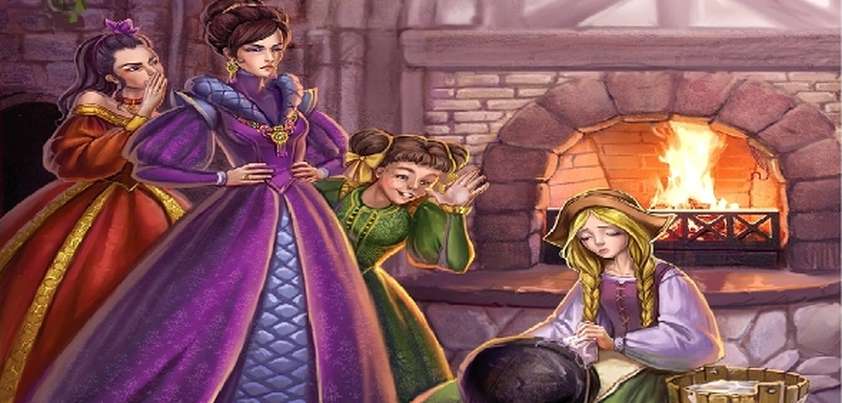
 Cinderella, perhaps the world’s best-known children’s story, has its origins in folklore. The version immortalized by Disney was first published in Charles Perrault’s 1697 book Stories or Tales from Times Past, with Morals, also known as Tales of Mother Goose. (Yes, Mother Goose was a man!) There are said to be over 1,000 variants of the story across the world. Perrault took the original framework, which has been around since the days of the pharaohs, and added the three elements for which his version is famous today: a fairy godmother, a pumpkin-carriage, and glass slippers. More…
Evening Primrose
 It is always nice to find a story with a quirky, innovative storyline. John Collier’s Evening Primrose is in the form of a journal describing the experiences of a failed poet who gives up the outside world to spend the rest of his life living in a department store. He plans to hide out by day and wander the store at night collecting food and other necessities. To his surprise, he finds that a small community of like-minded people already inhabit the store. The only things they fear are discovery by the night watchman and the gruesome “Dark Men.” More…
Pillar of Salt
 In this story by Shirley Jackson, a New Hampshire couple’s idyllic holiday in New York goes awry when the woman panics after falsely thinking a building they were in was on fire. She sees the once bright, exciting city differently, losing confidence among the crowds and imagining decay everywhere. When the couple discover a body part on a Long Island beach, she spins out of control. The next day, alone on a crowded sidewalk, she is too scared to even cross the street. Themes include loss of identity (powerlessness and invisibility among the crowds), anxiety, paranoia, fear. More…
The Devoted Son
 This heartbreaking story from Anita Desai begins with a working-class Indian father’s proudest moment. His son, always exceedingly respectful to his parents, has topped the country at medical school. The son becomes a highly successful doctor, and fulfills his familial duty by caring for his parents in their old age. As the father’s mental and physical health wanes, their relationship changes. The son ceases to respect his father’s wishes, and implements a harsh treatment plan that includes progressive denial of the old man’s few remaining pleasures in life. Themes: sacrifice, success, respect, envy, rituals/traditions, aging with dignity, devotion vs. duty. More…
The Bog Man
 As in an earlier Margaret Atwood story, The Age of Lead, The Bog Man revolves around a long-dead body. A university student’s hero worship of her archaeology professor leads to a torrid affair during which she accompanies him as his ‘assistant’ to inspect a 2,000-year-old body preserved in a Scottish peat bog. As his invisible wife comes between them, she feels “cheap and furtive”. Recognizing his shallowness, she ends the relationship. Like the bog man, over the years he becomes flatter and more leathery, as life goes out of him in her mind. Themes include infatuation, sexual exploitation, desire, guilt, empowerment. More…