 In this story by Milan Kundera, a Czechoslovakian college lecturer “rewards” an amateur researcher’s gushing praise by going to great lengths to avoid telling the truth about a substandard paper he has submitted for review. Having spent several years on the paper, the man needs the lecturer’s endorsement to have it published. He refuses to give up, resulting in a comic series of events that culminate in the lecturer not only being charged with immoral conduct by his local communist party committee, but losing his job and the partner he belatedly realizes he loves. Themes include hubris, deception, manipulation, persistence. More…
Three Skeleton Key
 Last year we featured Leiningen Versus the Ants, a story in which 400 men try to fight off an army of killer ants. In today’s tale by George Toudouze, three men are trapped inside an isolated lighthouse, surrounded by a horde of starving rats. One of the men is prone to panic and loses his mind when the rats break in to the lower part of the tower. The other two remain calm and, although a serious breach of duty, agree on a desperate course of action that saves the day. Themes: man vs. nature, fear, calmness under pressure. More…
Through the Wilderness
 In this story by Dan Jacobson a nominally Jewish university graduate, whose spiritual emptiness is compared with the vast emptiness of the South African veldt, encounters a black Israelite preacher. To his lay rabbi’s delight, this prompts him to begin a search for religious enlightenment. Unfortunately, the search ends when his bigoted father forbids further communication. The Israelite’s selfless missionary zeal is contrasted with a sheep-stealing native farm hand, who realizes that setting up his own church in a black community can be more profitable than working for a wage. Themes include religion, search for meaning, death, social class, racism. More…
The Woman Who Came at Six O’Clock
 The central theme of this early Gabriel Garcia Márquez story is perception of others. ‘Queen’, the six o’clock regular in José’s restaurant, is a prostitute. Queen’s customers see her as a sex object, to be used and sometimes abused. The police see her as an alcoholic miscreant who cannot be trusted. José, who professes platonic love for Queen, sees the vulnerable human being within. Queen, who claims to be disgusted by all men, sees the caring, kind-hearted José only as someone to be taken advantage of. Other themes: habit, murder, naïveté vs. worldliness, misunderstanding, reputation. More…
Diamond Cuts Diamond
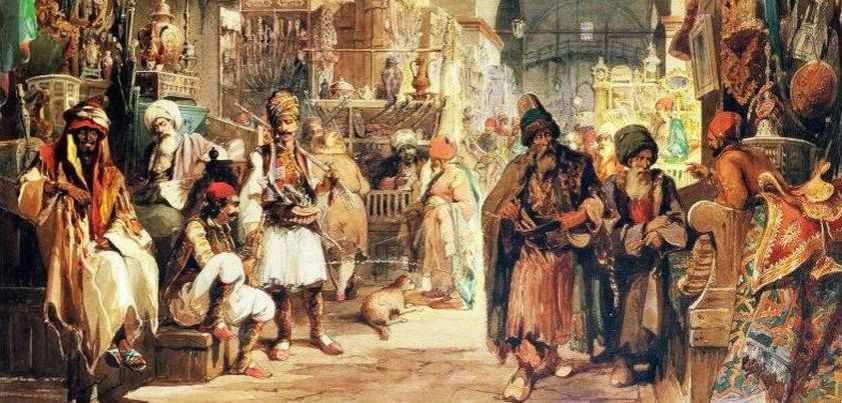 In this Indian folktale, a man travels to a distant land to seek his fortune. He succeeds and decides to convert his riches to jewels and return home. As he nears home, a ‘friendly’ merchant warns him that there are robbers on the road ahead. The traveler leaves his jewels in the care of the merchant. He then travels home to hire men to help him get the jewels through safely. On his return, the merchant tries to cheat him. To get the jewels back, the traveler needs help from someone who is even better at cheating than the merchant. More…