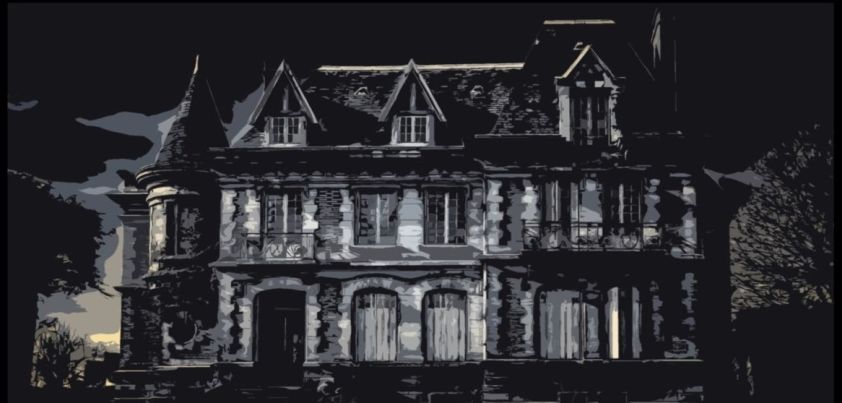
 Today we have another classic horror story from W. W. Jacobs. Four young travelers are drinking (tea of all things!) at an Inn. They are discussing the supernatural, and it soon becomes clear that three are believers to varying degrees and one is a total skeptic. One of them tells a story about a nearby haunted house that takes a “toll” of at least one life from every family or group that lives there—however short the time. Foolishly, they decide to put the story to the test. Themes: bravado, fear, the supernatural. More…
Dead End
 The protagonist of this coming of age story by Rudolfo Anaya faces a difficult decision: to honor a promise made to her dying mother, or risk ending a budding romance with the most sought after boy in school. Whichever choice she makes is likely to lead to a “dead end” of sorts. She comes close to a decision while ‘making out’ with the boy in his car. Fortunately, a childhood memory and plaintive sob from a passing bag lady help clear her mind. Themes: determination, family responsibility, dreams (a better future vs. ‘fitting in’ with the gang), sexuality, life choices More…
The Mouse
 This story by Saki satirizes the social sensitivities of the late-Victorian/Edwardian middle class. A prudish young man who has had a sheltered upbringing returns to the city from a farm visit. Sharing his train compartment is a woman who appears to be sleeping. He soon finds they are not alone… he has a mouse in his pants! To avoid offending the woman and causing a scene, he removes his trousers by hiding behind a blanket. Unfortunately, the blanket falls before can he put them on again and the woman wakes up. Themes include propriety, embarrassment, dissimulation, insensitivity towards others. More…
The Golden Goose
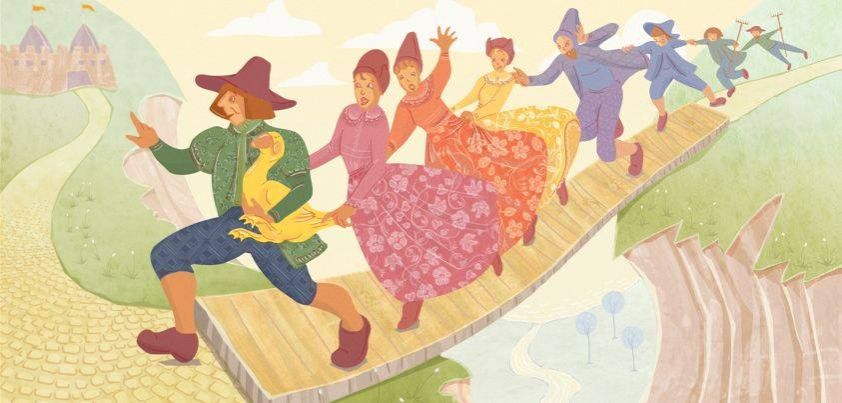 The Golden Goose is about a kind but not very clever young man who one day shares his food with a hungry old man. The old man tells him where to find a goose that has feathers of gold. The goose has a strange power. Those who touch it, and any who touch them, cannot remove their hands. A king, who has a daughter that has never laughed, has promised that she will marry the first man to make do so. The man and goose, with seven people running behind stuck fast to them, look silly enough to do this. More…
The Selfish Giant
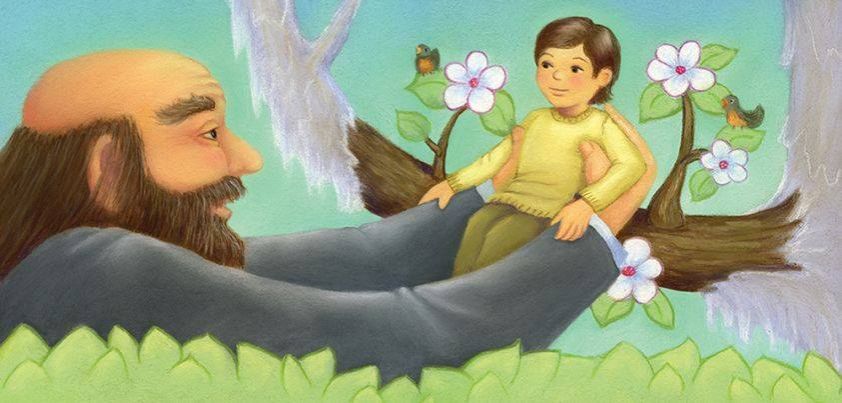 The Irish writer Oscar Wilde is known for his plays, his novel The Picture of Dorian Gray, and his short stories. He also wrote children’s stories, and this is one of the best known of these. A giant finds that his beautiful garden has become a playground for children. He drives them away and builds a wall around it. The seasons close in and his castle becomes a cold, miserable place. Redemption comes in the form of a small child the giant comes to love. The two main themes of the story are greed vs sharing, and Christian love. More…