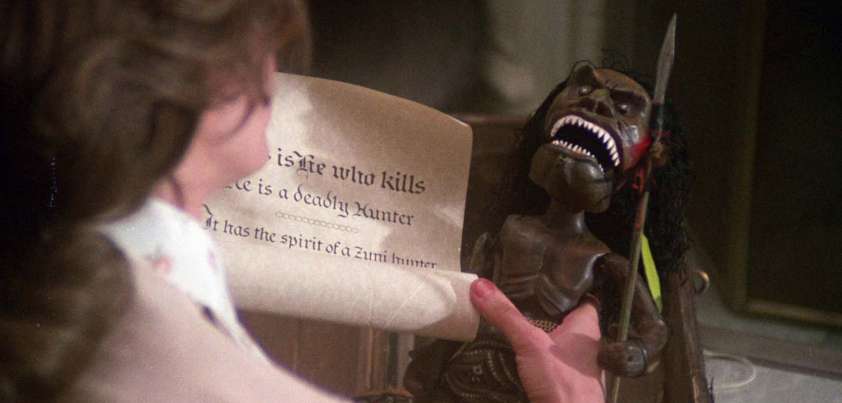
 In this story by Richard Matheson, a woman buys her new boyfriend a Zuni fetish doll for his birthday. A scroll inside the box reads THIS IS HE WHO KILLS…. HE IS A DEADLY HUNTER. As she prepares to shower, the doll turns out to be the real deal. It escapes the gold chain designed to keep the hunter’s spirit locked inside and sets off in search of prey. Although the girl and the spirit appear temporarily happy with the outcome, the girl’s mother may not be! Themes include control, isolation, violence, fear, determination, the supernatural. More…
Marriage Is a Private Affair
 The major themes of this early story by Chinua Achebe are generational conflict and change/progress. A young Nigerian couple living in 1950s Lagos decide to get married. They are from different ethnic groups, which causes tension with the man’s village-based father. He is from the Igbo ethnic group in which marriages are traditionally arranged by parents and restricted to others within the group. When the couple marry in defiance of tradition, the man’s father cuts off contact. Eight years later, a letter and rainstorm cause him to regret the decision. Other themes: family, tradition, bigotry, gender roles, defiance, pride, remorse. More…
MS. Found in a Bottle
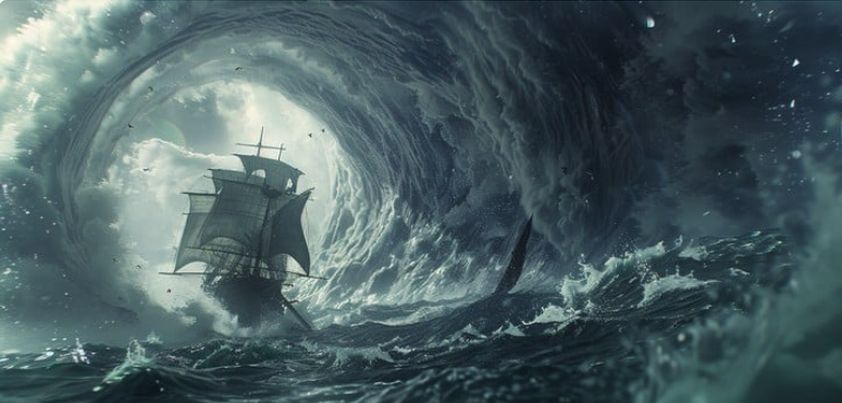 This story by Edgar Allan Poe is an MS. (manuscript) found in a bottle tossed into the ocean by a dying man. After outlining his once rational, skeptical outlook on life, he relates the story of how, after a series of misadventures at sea, he found himself on a huge ghost galleon speeding under full sail towards the South pole. He walks around the ship unseen by its crew of infirm old men, who become increasingly excited as they approach their doom. Themes include the power of nature, fear, exploration, rational thinking vs. the supernatural, compulsion to document the unexplainable. More…
A Face in the Dark
 The power of this very short horror story from Ruskin Bond is in the way the events described mirror what one might experience in a nightmare. As an alternative to supernatural forces, Bond cleverly presents a logical explanation for the night’s events: the way faces can appear ghostly by torchlight. Either way, the major theme of the story is fear when confronted with the unknown. A possible moral is that we shouldn’t judge people who look or dress differently due to their race, class, gender identity, religion, etc. Other themes include the supernatural and imagination vs. reality. More…
The Devil and Tom Walker
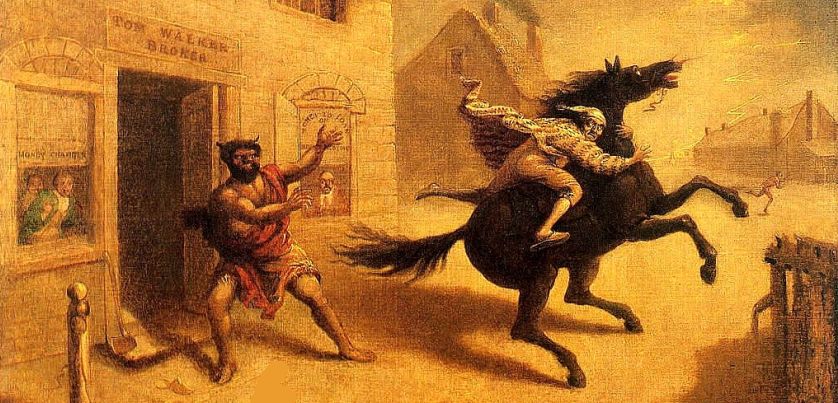 The major theme of this story by Washington Irving is greed. Other themes include storytelling, usury, religion and hypocrisy. Set in early eighteenth century America, a miserly, poverty-stricken man (Tom Webster) meets “Old Scratch” (the Devil) as he takes a short-cut home through a swamp. Tom initially declines an offer of riches for his soul, but later agrees after the Devil unknowingly does him a favor by disposing of his shrew-like wife. Upon becoming extremely wealthy by making and foreclosing on usurious loans, he tries to change his fate through “violent” religious piety. It doesn’t work! More…