 This tale by Lao Khamhom is a loosely based sequel to one of our earlier stories, As If It Had Never Happened. Road and bridge building projects have connected a once isolated Thai rice farming village to the outside world. A young girl, excited about her first bus-trip to a nearby town to sell vegetables, is befuddled by a petty extortion attempt at a government counterinsurgency checkpoint. Later, she experiences real graft when the “concessionaire” of a newly built highway refuses to allow her and other village busses to proceed. Themes include innocence, family, progress, connectivity, change, fear, oppression, corruption. More…
The Moonlit Road
 In this famous gothic horror story by Ambrose Bierce, a rich man has a loving wife who he does not trust. He sets a trap that doesn’t go as planned, resulting in him accidentally killing her. The unfortunate woman’s ghost, which is unaware who killed her, tries to contact him. This sets off a chain of events that ruins the lives of both the rich man and their only son. We hear the story from three perspectives: those of the son, a man we assume to be the husband/killer, and the ghost herself as told through a medium. More…
Tom Tit Tot / Rumpelstiltskin
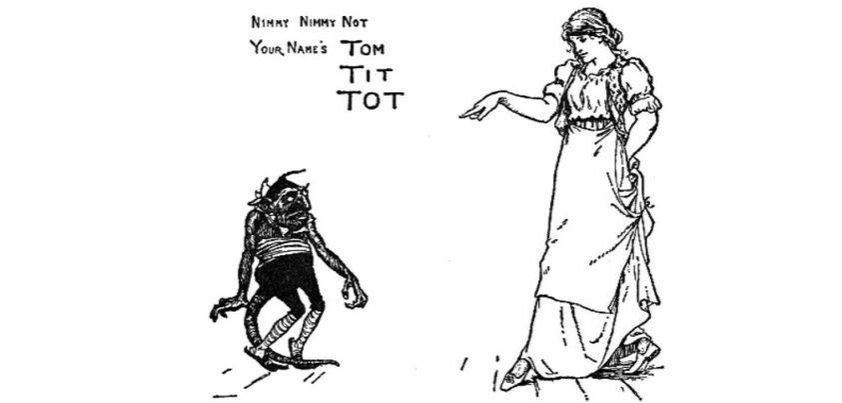 The protagonist in Tom Tit Tot is a lazy girl who doesn’t appear to be good at anything except eating. Her mother lies to the king by saying she is a whiz with the spinning wheel. For some reason this is just the kind of girl the king is looking to marry. The poor girl can’t even spin a top, so in order to avoid losing her head she accepts an offer of help from a small magical creature. As the creature helps the girl, she must try to guess its name. If she can’t, she shall become “its”. More…
A Way of Talking
 The major theme of this story from Patricia Grace is casual racism: the habit of using a racial descriptor (in this case the terms Maori and Pakeha) in a way that infers all members of an ethnic or cultural group share the same characteristics. Set in New Zealand, an indigenous university student visiting her home town for her sister’s wedding teaches the older girl a new “way of talking” when confronted with discriminatory or racist language. Other themes: cultural and individual identity; education as a force for social change; the courage to speak out, even if standing alone. More…
Rappaccini’s Daughter
 This story from Nathaniel Hawthorne takes the “mad scientist” motif to a new level. Renowned physician Rappicini is fascinated with the curative power of deadly plants. An experiment that makes his young daughter immune to their poison comes at a terrible price: her skin and breath become toxic to others. As the poor girl grows into womanhood, the twisted doctor decides to make a potential partner immune to her poison. Unfortunately for all, a scientific rival plants a different kind of poison in the man’s heart and hands. Themes: science vs. morality, innocence, nature, oppression, isolation, envy, love, betrayal. More…