 Jorge Borges gives this story a timeless quality by setting it in medieval times and framing it like a fairy-tale. A traveler arrives at an isolated woodcutter’s hut claiming to be an exiled king descended from Odin, the Norse king of the gods. He supports this by showing the woodcutter what he claimss to be the disk of Odin, the only one-dimensional object in the universe. Ironically, the woodcutter answers: I do not worship Odin, I worship Christ… and then kills him to possess Odin’s disk. Theme: the desire to own something that holds power over the world around us. More…
The Thakur’s Well / Thakur Ka Kuan
 This poignant story by Premchand highlights the degrading treatment of Dalits (untouchables) under India’s caste system.A woman brings water for her sick husband from the only well in the village available to Dalits. It is contaminated and has a foul smell. She doesn’t know that boiling will purify the water, and decides that her only option is to risk a severe beating by secretly drawing water from the well of the high-caste Thakur, who forbids low-caste villagers from using it. Themes include social class, discrimination, poverty, courage, gender roles, corruption of the upper classes. More…
The Stonecutter
 This folktale from Japan is about a hardworking man who leads a poor but happy life until the day a mountain spirit decides to grant him several wishes. Predictably, his initial wish is for riches. When this does not satisfy, he craves power. He starts with power over man (as a prince), and moves on to power over nature (as the sun, a cloud, and a great rock on a mountainside). He is never satisfied until finally realizing that a humble stonecutter has as much power as anyone or anything on Earth. More…
The Garden Party
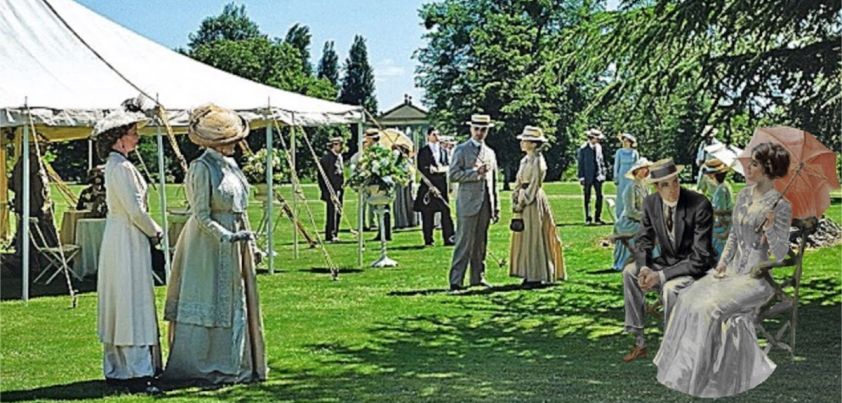 Because of the complex issues raised, this is one of Katherine Mansfield’s most highly acclaimed stories. A wealthy family enjoy an ostentatious garden party in the spacious grounds of their mansion, fully aware that the father of a poverty-stricken family living within hearing distance died in an accident earlier the same day. Only one family member (a teen-aged girl) is sensitive to the poor family’s plight. She visits the house to offer condolences, and experiences an epiphany when unexpectedly ushered in to view the body. Themes include social class (class-consciousness, pretention, insensitivity towards others), poverty, innocence, humanity, coming of age. More…
Boys and Girls
 The major themes of this story by Alice Munro are coming of age and gender roles. Set on a Canadian fox farm, a young tomboy prefers to spend her time outdoors with her father rather than indoors helping her mother. When she overhears her mother talking about how happy she will be when the girl is older and can help more around the house, she feels betrayed. Her outlook slowly changes as she gets older, culminating in a rebellious act that her father dismisses with the words She’s only a girl. Other themes: family relationships, loss of innocence, self-awareness. More…